
Most “should we upgrade?” decisions come down to one practical question: can a technician turn the valve smoothly and reliably every time, under real differential pressure, with gloves on, in a tight pipe rack, without overexertion or improvised cheater bars. That’s the point where a gear operated ball valve stops being a preference and becomes a reliability control.
If you want a quick refresher on gearbox operation and why it’s used, this explainer is a good baseline: How Gear-Operated Valves Work.
The physics: torque becomes hand force
The core relationship
Manual force isn’t a mystery; it’s a simple lever relationship:
Hand Force (N) = Required Torque (N·m) ÷ Effective Handle Length (m)
So if the required torque is 300 N·m and the handle is 0.4 m, the operator force is:
300 ÷ 0.4 = 750 N (about 75 kgf of push)
And that’s before you add real-world factors like awkward body position, limited clearance, cold-weather PPE, or slippery grips.
Why gearboxes change the outcome
A gearbox reduces the required hand force by trading force for turns. A simplified model looks like this:
Hand Force ≈ Torque ÷ (Handle Length × Gear Ratio × Efficiency)
Efficiency matters because worm gears, seals, and internal friction reduce “real” mechanical advantage. That’s why conservative assumptions help prevent complaints later.
Proof block: a 60-second upgrade test (field-friendly)
Use this worksheet before you “guess” DN limits
- Get peak valve torque from the datasheet (worst-case ΔP and temperature).
- Measure the actual usable handle length (often shorter than catalog images due to clearance).
- Calculate hand force using the formula above.
- If the number is beyond what your site considers acceptable, upgrade to a gearbox.
Practical trigger points you can defend in review
- Operators need two people to stroke the valve
- “Pipe extension” behavior is becoming normal
- Access prevents a full handle swing (movement becomes jerky and force spikes)
- Torque rises after downtime (packing set, deposits, seat compression)
Those aren’t comfort issues; they’re repeatability issues.
DN size limits: why “diameter” isn’t the whole story
What really drives manual torque
DN is related to torque, but it’s rarely the full explanation. Manual operability is usually driven by:
- Differential pressure (ΔP) across the ball
- Seat design and seat preload
- Packing friction and stem finish
- Media behavior (viscous fluids and solids raise torque over time)
- Port geometry (a full bore valve may be chosen for flow, but seat/packing still controls operating torque)
That’s why two valves with the same DN can feel completely different on the same site.
A simple decision table (used for selection notes)
| Condition | Manual lever risk | Gearbox benefit |
| High ΔP at operation | Breakaway spikes | More consistent break-to-open |
| Limited handle swing clearance | Jerky movement, higher peak force | Compact input with multiple turns |
| High cycle frequency | Wear + operator fatigue | Repeatable operation, less abuse |
| Dirty/viscous media | Torque drift over time | More margin for friction growth |
If you’re still scoping the valve type and construction, start from the product family and narrow by class and end connection: Ball Valve.
When to upgrade from lever to gearbox
Upgrade when force becomes non-repeatable
A gearbox is justified when the operation can’t be repeated safely and consistently. Common signs:
- Torque is acceptable at commissioning, then climbs after weeks/months
- Operators “bounce” the handle to break static friction
- The valve is only operable from one body position (poor ergonomics)
- Near-miss incidents occur during isolation or depressurization steps
At that point, a gear operated ball valve isn’t a premium feature; it’s a control that protects isolation procedures and reduces rework.
2-PIECE BALL VALVE
Application scope: petroleum chemical industry, electric power, metallurgy, medicine, real estate, municipal engineering and other industries.
Explore Product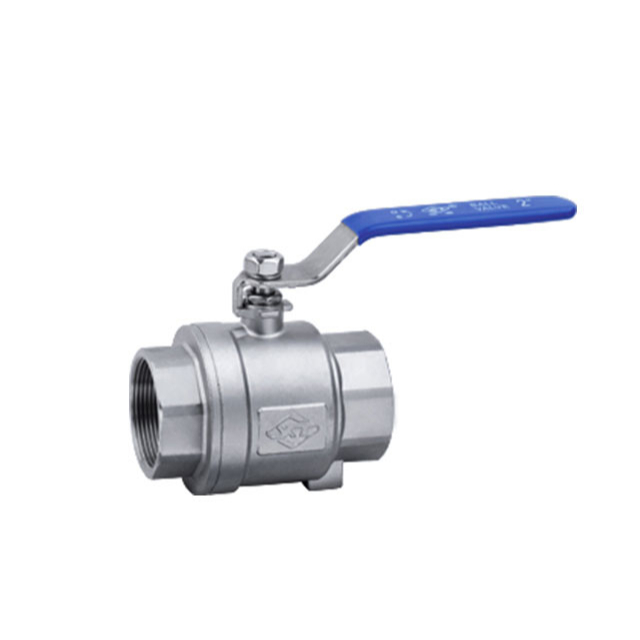
Don’t ignore maintenance access
Gearboxes can also improve the maintenance workflow:
- More predictable shutoff positioning
- Reduced stem shock and fewer packing disturbances
- Less temptation to over-torque at end stops
That stability matters most on lines where isolation quality is tied to safety permits.
Conclusion
The “DN limit” question is best answered with math plus field constraints, not habit. Convert torque to hand force using real handle length, then factor in clearance, PPE, and how torque drifts with your medium. When reliability depends on consistent operation, a gear operated ball valve is often the cleanest upgrade path because it reduces human variability that lever setups can’t control.
3 Key Takeaways
- Torque-to-force math gives a defensible reason to upgrade (and avoids subjective arguments).
- DN alone doesn’t set the limit; ΔP, packing friction, media, and access drive real operability.
- If the valve can’t be stroked consistently without improvisation, a gear operated ball valve is the safer long-term choice.
FAQs (People Also Ask style)
How do I calculate the force needed to operate a manual ball valve?
Divide the required torque by the effective handle length. Use worst-case ΔP and temperature torque values, not “normal” conditions.
At what DN should I switch to a gearbox?
There isn’t one universal DN cutoff. Use the force calculation plus site constraints (clearance, PPE, operator policy) to set your limit.
Why does a valve get harder to turn after downtime?
Packing can set, deposits can form, and seat compression can increase breakaway torque, raising peak force even if running torque is unchanged.
Does a gearbox reduce torque or just reduce operator force?
It reduces operator force by increasing mechanical advantage. The valve torque requirement remains; the gearbox changes how that torque is applied.
What should I document in procurement when upgrading to a gearbox?
Peak torque basis, operating ΔP/temperature, required safety margin for torque drift, clearance constraints, and the expected number of turns.


