
A valve failure in an oil and gas facility can halt production, damage downstream equipment, or trigger a safety emergency. The temperatures exceed 816°C, pressures go beyond 25,000 psi, plus exposure to corrosive saltwater.
Choosing the right valve determines how long your industrial system works. Many procurement teams choose gate valves or ball valves. However, for increasing ranges of upstream, midstream, and downstream applications, it is better to choose butterfly valves.
Oil and gas butterfly valves deliver better speed, lower weight, and a lower total cost of ownership. In this article, we will explore how to choose based on function, operation, and application.
The Working Mechanics of an Oil and Gas Butterfly Valve
A butterfly valve is controlled by a rotating disc that rotates exactly 90 degrees when opening or closing. The valve is connected via a stem to an actuator. When the disc is parallel to the pipe bore, fluid flows freely. When it is rotated perpendicularly, the disc blocks the flow.
The butterfly valve has four components:
- The valve body is the outer housing that connects to the pipe.
- The disc, which rotates to open or restrict flow.
- The seat, which refers to the sealing surface.
- The actuator can be manual, electric, pneumatic, or hydraulic.
There are various butterfly valve sizes. For example, a standard butterfly valve 4-inch configuration works well in auxiliary or secondary lines. On the other hand, large-diameter models handle main process headers. Butterfly valves are more compact and are space savers as compared to gate or globe valves.
Why Industrial Butterfly Valves Work Well in Oil and Gas

Butterfly valves are the standard choice when it comes to the oil and gas sectors. Here are the practical advantages:
Speed of Operation
A butterfly valve can operate in under 5 seconds with a single 90-degree turn. This means you can immediately restrict or allow fluid to flow.
A gate valve can take 20 to 30 seconds or more to close. In an emergency shutdown or fire suppression event, this timing is very critical. They are placed at compressor discharges, receiver tank outlets, and main pipelines for rapid shutoff.
Compact and Lightweight Design
A 6-inch ball valve can weigh over 100 pounds. A butterfly valve of the same type weighs a fraction of that.
On offshore platforms, weight is critical because it drives up construction and installation costs. Engineers specify butterfly valves because they are lighter and help reduce the platform’s overall load.
Butterfly valves are ideal for cramped pipe racks and large headers. Their compact size fits where bulkier valves won’t.
Cost-Effectiveness and Size
As the pipe diameter increases, butterfly valves become more cost-effective. For example, a 24-inch butterfly valve is cheaper than a 24-inch ball or gate valve. It also requires a smaller actuator to operate.
Options for Flexible Actuation
Butterfly valves operate manually, pneumatically, hydraulically, or electrically. Engineering teams can match the actuator type to site conditions, safety requirements, and automation level.
For example, the Bray butterfly valve actuator product line uses pneumatic actuation. This is a common choice in process environments where fast cycling and hazardous-area approval are both required.
Availability in Various Sizes
Butterfly valves cover a wide bore range, ranging from small utility sizes up to DN 5000 for large industrial pipes. This makes them a practical choice for main supply lines and intake structures where other valve types become prohibitively heavy or expensive.
Types of Butterfly Valves Used in Oil and Gas
The oil and gas industry limits the use of specific butterfly valve units. Here are the three most common types specified for these industries:
- Triple Offset or Triple Eccentric Butterfly Valve
A triple offset butterfly valve uses three specific design shifts to move the stem away from the centre of the seat. As the valve opens, the disc lifts away from the seat with no rubbing or friction. This results in a longer service life and bubble-tight seal rated up to ASME Class 1500.
Triple offset butterfly valves handle pressures up to 25,000 psi and temperatures up to 816°C. They are the standard choice for critical isolation on offshore platforms, floating production storage and offloading (FPSO) vessels, and high-pressure gas pipelines.
- Metal Seal Butterfly Valve
Metal seal butterfly valves are preferred for services involving corrosive, abrasive, or high-temperature media. They can handle fluid temperatures up to 540°C and deliver bubble-tight shut-off even in aggressive refinery streams.
Buyers often compare options in categories such as the Bray stainless steel butterfly valve range. They are looking for corrosion-resistant body material and a metal seat that does not degrade under attack. Stainless steel construction (316L or duplex grades) is standard for offshore and chemical service.
- Centerline (Wafer-Type) Butterfly Valve
A centerline or wafer-type butterfly valve is specified for non-critical or auxiliary applications. They provide a cost-effective solution for secondary flow lines, storage tank inlets, and water treatment. They are easy to install and fit between two flanges with long bolts, which do not require special adapters.
Many procurement teams reference documents like the Bray Butterfly valve catalogue PDF when comparing specifications across brands.
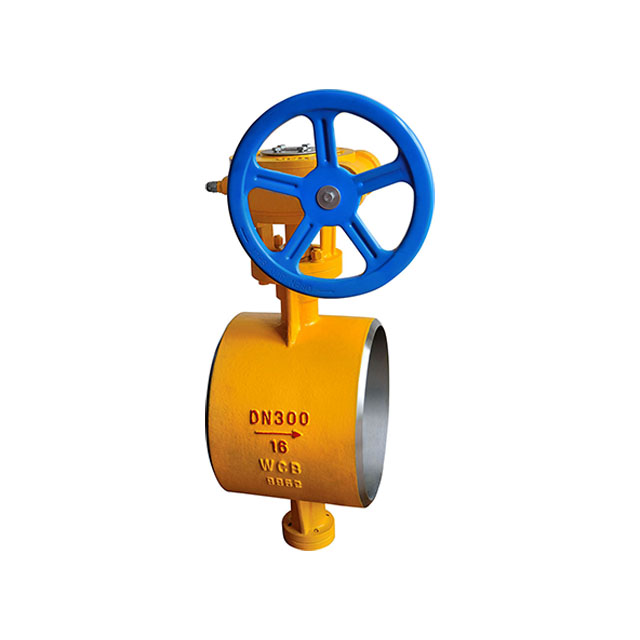
Pressure: CL150 (PN6~PN25)
Connect Type: FLG
Standard: ASME B16.34 / API-609
Real World Oil and Gas Applications of Butterfly Valves
Here are the most common applications of butterfly valves in the oil and gas industry:
- Pipeline isolation: During maintenance, triple offset butterfly valves shut down individual pipeline sections without interrupting the full system.
- Refinery flow control: Metal seal butterfly valves manage corrosive process streams through distillation and cracking units.
- Offshore platforms: Lightweight butterfly valves reduce topside load where every kilogram of installed equipment affects structural design.
- Gas processing units: Triple offset designs deliver precise control at varying pressures in gas compression and treatment trains.
- Storage and metering stations: Manual butterfly valves provide dependable shut-off in low-automation areas at a fraction of ball valve cost.
- Emergency systems: Compact designs like the Bray 3L Butterfly Valve are commonly specified for tight-space emergency isolation on branch connections and compressor discharges.
Conclusion
Procurement buyers and engineers evaluate oil and gas butterfly valve replacement units and compare them against other Bray Butterfly Valves distributors. Choosing the right oil and gas butterfly valves helps reduce maintenance intervals, cuts weight and cost, and keeps your system in safe operating conditions.
Xintai Valve has manufactured industrial butterfly valves since 1998. The company holds API and ISO certifications, operates six production bases across China, and produces over 270,000 valves annually.
Contact Xintai Valves to request a technical datasheet for API 609-compliant butterfly valves.


