
The primary difference between a segmented ball valve and a V ball valve lies in their internal design and flow control capabilities.
A segmented ball valve features a contoured ball segment that provides excellent throttling control, while a V ball valve, also called a V port ball valve, has a V-shaped notch that enables precise flow modulation.
Both valve types serve industrial applications requiring accuracy and durability, but their structural distinctions determine their suitability for different processes.
Understanding these differences helps industries select the best valve for fluid control.
This article explores how segmented ball valves compare with V ball valves, their applications, advantages, and how to choose between them.
Comparing Segmented Ball Valves and V Ball Valves


1. Design Differences
| Feature | Segmented Ball Valve | V Ball Valve (V Port Ball Valve) |
| Ball Shape | Contoured ball segment | V-notch in ball or seat |
| Flow Control | Moderate to high | Precise, linear flow control |
| Self-Cleaning? | Yes, due to sharp edges | No |
| Throttle Efficiency | High but less precise than V-notch | Very high, allows fine-tuned control |
| Best for? | High-viscosity fluids, slurries | Low-viscosity fluids, gas flow |
2. Flow Control Precision
A segmented valve provides better throttling than a standard ball valve, but a V port ball valve offers even finer flow modulation.
The V-notch shape creates a more gradual flow adjustment, making it ideal for precision metering applications.
3. Resistance to Clogging
Segmented ball valves are self-cleaning because the ball’s sharp edges break down solids and debris as the valve operates.
This feature makes them superior to V-ball valves in applications involving slurries, wastewater, or thick chemicals.
4. Durability and Material Selection
Both segmented and V-ball valves are available in stainless steel, brass, and coated alloys, allowing them to withstand harsh environments.
However, segmented ball valves are often preferred for abrasive and high-pressure applications due to their robust construction.
5. Application Suitability
| Application Type | Segmented Ball Valve | V Ball Valve (V Notch Ball Valve) |
| Throttling Control | Good | Excellent |
| High Viscosity Fluids | Best suited | Not ideal |
| Slurries and Solids | Yes | No |
| Batch Processing | Acceptable | Best option |
| Gas Flow Control | Can be used | Ideal |
What is a Segmented Ball Valve?
A segmented ball valve is a quarter-turn control valve featuring a partially contoured ball segment.
Unlike standard ball valves, which are designed primarily for on/off control, segmented valves offer superior throttling capabilities.
Their unique design (wafer or flange-type)allows them to regulate flow with higher precision, making them a hybrid between a standard ball valve and a globe valve.
Key Features of a Segmented Ball Valve
- Segmented Ball Design: The valve contains a cut-out ball segment, which enables better flow control.
- High Flow Capacity: Due to the segment’s shape, the valve allows large fluid volumes to pass with minimal resistance.
- Self-Cleaning Action: The ball’s sharp edges help prevent clogging by cutting through solids and debris in the flow stream.
- Excellent Throttling Control: Compared to standard ball valves, segmented valves provide improved modulating control.
- Durable Construction: Typically made from stainless steel or other corrosion-resistant materials, these valves handle abrasive and high-viscosity fluids well.
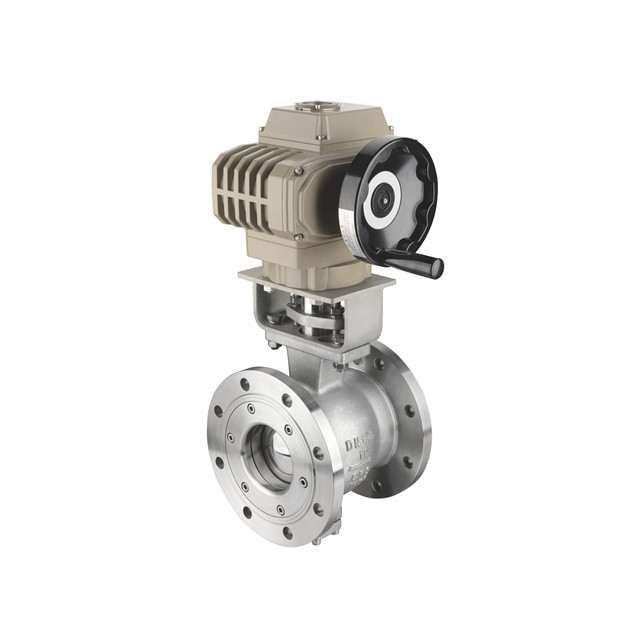
🔧 V-Notch Valve (V Port Ball Valve)
Need precise, linear flow control? As the article mentions, the V-Notch design is the ideal solution for metering and modulation in food processing, pharmaceutical, or gas applications.
Explore Product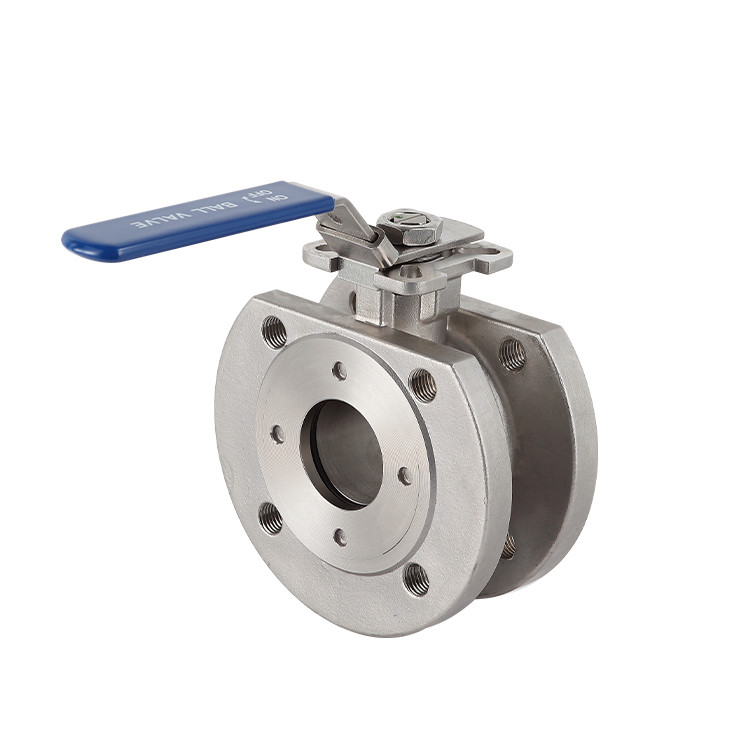
🔧 Wafer Type Segment Ball Valve
The optimal solution for handling challenging fluids. As the article notes, the Segment Valve design is self-cleaning and ideal for slurries, pulp & paper, or wastewater.
Explore ProductCommon Applications of Segmented Ball Valves
Segmented ball valves are widely used in industries requiring high-precision flow control. They are common in:
- Pulp and Paper Industry: Managing slurry and pulp flow.
- Chemical Processing: Controlling aggressive chemicals and high-viscosity fluids.
- Wastewater Treatment: Handling fluid mixtures with suspended solids.
- Oil and Gas Industry: Managing fuel and lubricant flow.
These industries prefer segmented valves because of their ability to handle challenging fluids while maintaining consistent performance.
What is a V Ball Valve?
A V-ball valve, also known as a V-port ball valve or V-notch ball valve, features a V-shaped notch in the ball or seat.
This design allows for a gradual increase in flow rate as the valve opens, ensuring linear flow characteristics.
Key Features of a V Ball Valve
- V-Shaped Notch: The V design enables precise flow modulation and a more controlled opening.
- Linear Flow Control: The valve’s flow characteristics allow for accurate adjustment of fluid flow rates.
- High-Performance Sealing: Designed to minimize leakage in both open and closed positions.
- Versatile Flow Control: Unlike standard ball valves, which operate in binary (on/off) positions, V ball valves allow fine-tuned regulation of flow.
- Minimal Pressure Drop: The V-shaped opening ensures efficient fluid passage, reducing energy loss in the system.
Common Applications of V Ball Valves
V-notch ball valves are commonly used where precise flow regulation is necessary. Some common applications include:
- Pharmaceutical Industry: Regulating liquid medication production.
- Food and Beverage Processing: Controlling liquid ingredients and mixtures.
- Water Treatment Plants: Managing water flow and chemical dosing.
- Gas and Petroleum Industry: Handling pressurized gases and fuels.
Due to their linear flow control and precise modulation, V ball valves are highly effective in batch processing systems that require accurate dosing.
When to Use a Segmented Ball Valve vs. a V Ball Valve
| Choose a Segmented Ball Valve When | Choose a V Ball Valve When |
| Handling slurries, pastes, or thick fluids. | Precision flow control is critical (e.g., pharmaceuticals, food processing). |
| Working in pulp and paper, chemical, or wastewater industries. | Working with low-viscosity fluids or gas flows. |
| Needing a self-cleaning valve for continuous operation. | Needing linear flow modulation for metering applications. |
| Requiring a balance between on/off function and throttling control. | Operating in batch processing systems requiring fine-tuned adjustments. |
Selecting the right valve depends on the fluid type, flow control requirements, and industrial application.
Conclusion: Segmented Ball Valve vs V Ball Valve
The choice between a segmented ball valve and a V ball valve depends on flow control precision, fluid characteristics, and application needs.
Segmented valves excel in handling high-viscosity fluids and slurries, while V-notch ball valves provide precise flow modulation for low-viscosity fluids and gases.
Industries requiring self-cleaning capabilities and moderate flow control often opt for segmented valves, while those prioritizing precise metering and batch processing favor V-port ball valves.
Understanding these differences ensures better operational efficiency, reduced maintenance, and improved process control.


