
Choosing between a plug valve and a butterfly valve starts with understanding how each one works and where each performs best, so this article explains the key differences in a clear and practical way.
Both valves are common in industries that handle liquids, gases, steam, and chemicals, but the right choice depends heavily on your system’s needs.
This guide compares plug valve vs butterfly valve performance, operation, cost, and ideal applications to help you make a confident selection.
Understanding Plug Valves
Plug valves use a cylindrical or tapered plug that rotates inside the valve body to open or close the flow.
They are valued for their tight shutoff capabilities and their ability to handle thick, viscous, or contaminated media.
Many industrial plants use them because they can seal reliably even when the fluid contains solids or corrosive elements.
Another thing that makes them stand out is the consistent torque required to operate them, which supports smooth switching between open and closed positions.
In high-pressure and chemical processing lines, plug valves often become the preferred option because of their durability and ease of actuation.
Plug Valve
Plug valves are valves with cylindrical or conically tapered “plugs” which can be rotated inside the valve body to control flow through the valve.
Explore Product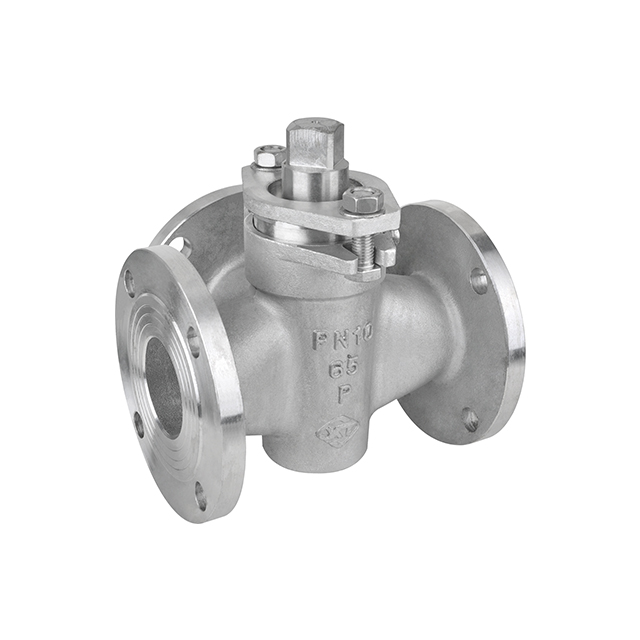
Understanding Butterfly Valves
Butterfly valves rely on a flat disc positioned at the center of the pipe.
When the disc turns, the valve either allows flow or restricts it.
They are known for being lightweight, compact, and cost-effective, which is why they are widely used in water treatment, HVAC lines, and low to medium-pressure services.
The simple quarter-turn mechanism allows quick operation, making these valves ideal for large pipelines where fast shutoff is needed.
Butterfly valves are also available in multiple configurations that suit various flow control situations, from simple on and off service to throttling and modulating control.
Plug Valve vs Butterfly Valve: Key Differences at a Glance
The table below summarizes the major differences to help you choose the right valve type for your system:
| Feature | Plug Valve | Butterfly Valve |
| Design | Uses a solid plug that rotates to block or allow flow | Uses a rotating disc mounted at the pipe center |
| Flow Control | Excellent sealing and precise shutoff | Good for quick shutoff but may allow slight leakage |
| Pressure Handling | Performs well in high-pressure, high-temperature lines | More suited for low to medium pressure applications |
| Media Compatibility | Handles thick, dirty, or corrosive media effectively | Best for clean liquids, gases, and water systems |
| Operation Torque | Higher torque due to friction between plug and body | Lower torque makes it easy to automate |
| Maintenance | Requires periodic lubrication; parts may be heavier | Easier to maintain with fewer internal components |
| Cost | Generally more expensive due to rugged design | Typically cheaper and more economical for large pipes |
| Installation Space | Bulkier and heavier | Compact and ideal for tight spaces |
| Ideal Applications | Chemical processing, slurry, oil and gas systems | Water lines, HVAC, general industrial piping |
How to Decide Which Valve to Choose
If your priority is tight shutoff and reliability under harsh conditions, you will find that plug valves offer better performance.
Their rugged build helps avoid leakage and improves system safety, especially in chemical plants, oil processing lines, and high-pressure environments.
You should also consider them if your operation involves media that are sticky, heavy, or corrosive.
However, if your project requires a more affordable valve with quick operation and minimal installation space, butterfly valves tend to be the better choice.
They are practical for large-diameter pipelines and general flow control tasks.
Many engineers choose them for water distribution systems, cooling lines, or pipelines that require rapid shutdown.
Your decision also depends on maintenance priorities.
Plug valves may require more upkeep because of the lubricated plug design.
Butterfly valves, on the other hand, are easier to maintain and replace, especially in systems where downtime must be minimized.
Final Thoughts: Plug Valve vs Butterfly Valve
Choosing between a plug valve vs butterfly valve becomes easier when you look at how your system operates and what your flow media requires.
Plug valves deliver robust sealing and durability under tough conditions, while butterfly valves offer simple operation, lower costs, and flexible installation.
Both remain essential options in modern industries, and selecting the right one ensures safety, efficiency, and long-term performance.

Customize the perfect valve for your project! Get a quote and explore our custom options.


