
Choosing the right valve is critical for system efficiency. The wrong valve type can also cost you more money. It can lead to system uptime, maintenance hours, and even product integrity.
If you work in water treatment, HVAC, chemical processing, or general industrial piping, you likely handle various components. In these fields, you may have evaluated a rubber-lined butterfly valve.
This guide breaks down the real advantages and disadvantages of butterfly valves. It also covers key variants: from the semi lug butterfly valve to the grooved butterfly valve. This guide can help you match the right design to your operating conditions.
Defining the Rubber-Lined Butterfly Valve
A butterfly valve is a quarter-turn rotary device. It uses a centrally mounted disc to regulate the flow of liquids, gases, and slurries.
This valve type adds a rubber elastomer layer to the valve body interior and disc seat. This helps prevent corrosion and ensures tight sealing.
Common liner materials include EPDM, NBR, and VITON. These are suited to different media and temperature ranges.
Key Components and Operation
- The Disc is the primary flow-control element that rotates 90 degrees.
- The Shaft connects the disc to the manual handle or automated actuator.
- The Seat is the sealing surface that prevents leakage when the valve is closed.
- The Body houses all components and connects directly to your piping system.
Common Types for Industrial Systems

The different applications require specific valve architectures. Understanding these types is essential for proper rubber-lined butterfly valve installation.
Here are the different valve types and their specific applications:
- Wafer Style: These are often installed between pipe flanges. It is a cost-effective choice for standard flow applications.
- Semi Lug Butterfly Valve: This valve type features bolt holes that allow for easier alignment during installation compared to pure wafer styles.
- High-Performance (Double Offset): In this valve type, the disc is offset from the seat. This design reduces seat wear and provides a tighter shutoff.
- Triple Offset: The TOV features metal seats for high-pressure butterfly valve needs. This valve is suitable for extreme temperatures and zero-leakage requirements.
- Grooved Butterfly Valve: This valve type is often used in HVAC and fire protection. The valve utilizes a butterfly valve coupling for a quick, bolt-on connection to grooved-end pipes.
Advantages of Butterfly Valves with Rubber Lining
1. Compact and Lightweight Design
Butterfly valves use fewer materials than gate or globe valves of the same pipe size. This makes them easier to ship, install, and support within a piping network.
For large-diameter pipelines, which measure DN200 and above, the weight savings are significant. You spend less on structural supports and reduce installation labor time.
2. Lower Cost Per Unit
These valves are cheaper than ball valves of the same size. Fewer components, a simpler body design, and shorter face-to-face dimensions all reduce the unit price. Maintenance costs also stay low. The rubber seat is the primary wear component, and replacement does not require removing the entire valve body from the line in most designs.
3. Fast Operation and Automation Compatibility
The quarter-turn mechanism opens or closes the valve in seconds. This is very important in emergency shutoff scenarios and in automated process lines. Response time greatly affects the output quality.
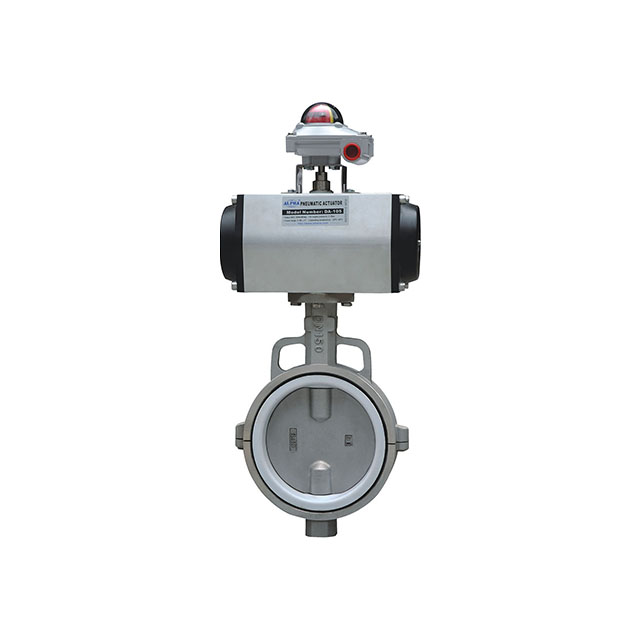
Butterfly valves accept electric, pneumatic, and hydraulic actuators. You can integrate them into PLC-controlled systems with minimal modification to the valve body.
4. Versatility in Material and Media
A CF8M stainless steel butterfly valve maintains structural integrity in acetic acid and chlorinated water environments. These valves can transport mud and slurries with minimal accumulation at the pipe mouth. They also support bi-directional flow.
4. Low Pressure Drop When Fully Open
When fully open, the disc sits parallel to the flow path and creates minimal obstruction. Fluids can pass through with low resistance. This reduces the pumping energy your system requires.
This makes butterfly valves a practical choice for large-volume flow systems such as water distribution networks, cooling systems, and fire suppression lines.
5. Good Sealing at Low and Medium Pressures
The elastomer liner achieves Class VI bubble-tight shutoff per ANSI/FCI 70-2 standards. EPDM liners handle water and steam well. NBR liners resist oil and petroleum-based media. VITON liners suit chemical and high-temperature environments.
For higher-pressure applications, a stainless steel butterfly valve with a metal seat offers tighter shutoff without rubber seat limitations. You may choose either a double or triple eccentric design.
6. Versatile Connection Options
You can specify a butterfly valve with rubber lining in wafer, semi-lug butterfly valve, or grooved butterfly valve configurations. Each connection style suits different installation requirements:
- Wafer: sandwiched between flanges; lowest cost option
- Semi lug: allows dead-end service on one side of the valve
- Grooved (Victaulic-style): fast installation with mechanical couplings; common in fire protection systems
Disadvantages of Butterfly Valves with Rubber Lining
1. Pressure and Temperature Constraints
The standard butterfly valves have smaller operating ranges compared to other types. High-pressure conditions can compromise the seals of lower-end models. Therefore, engineers should specify triple eccentric designs in extreme environments.
2. Throttling and Cavitation Risks
Throttling is most effective when the disc is opened between 30 and 80 degrees. High-velocity flow may cause cavitation at partial openings.
Cavitation typically occurs when the pressure drop across the valve exceeds 70% of the inlet pressure. This can damage the valve and pipeline over time.
3. Sensitivity to Viscous Fluids
Viscous fluids can scour the disc during operation. This leads to a loss of sealing pressure. In these cases, a gate valve may be a more robust alternative.
4. Rubber Seat Wears Over Time
Every time the disc closes, it compresses the rubber seat. Over thousands of cycles, this mechanical friction wears down the elastomer.
Corrosive or abrasive media accelerate this wear. Selecting the correct liner material for your specific process fluid extends seat life and reduces replacement frequency.
5. Large-Diameter Manual Operation Is Difficult
Manually operating a butterfly valve above DN300 requires significant torque. Without a gearbox or actuator, frequent operation becomes physically demanding and slows down your team.
For valves above DN200 in high-cycle service, specifying a pneumatic or electric actuator during procurement avoids this problem entirely.
Quick Comparison: When to Use a Butterfly Valve vs. Alternatives
The table below summarizes the specifications to help you choose valve alternatives:
| Unit Cost | Low | Higher | Medium | Medium–High |
| Size & Weight | Compact | Bulkier | Bulky | Bulky |
| High Pressure (>PN25) | Limited | Excellent | Good | Excellent |
| Throttling Control | Moderate | Poor | Poor | Excellent |
| Full-Bore Flow | No | Yes | Yes | No |
| Slurry / Mud Handling | Moderate | Poor | Moderate | Poor |
Procurement Checklist for B2B Buyers

Keep these factors in mind when sourcing alternatives to a TOMOE butterfly valve or a Victaulic butterfly valve:
- Standard Compliance: Ensure the valve meets API 609, ISO 5752, or ANSI standards.
- Media Compatibility: Match the seat material (PTFE, EPDM, or Metal) to your process fluid.
- Actuation: Determine if you need a manual gearbox or an automated electric/pneumatic actuator for high-cycle systems.
- Total Cost of Ownership: Factor in seal replacement intervals and potential downtime.
Conclusion
A rubber-lined butterfly valve is compact, cost-effective, and easy to install. It also works well in low-to-medium pressure systems handling water, slurries, and non-aggressive media.
However, it is not the right choice for high-pressure service, precision throttling, or media containing abrasive solids. Knowing these limits helps you specify the correct valve the first time and avoid costly replacements.
XINTAI produces centerline wafer, double eccentric, and triple eccentric butterfly valves in sizes from DN50 to DN1200. The valves are certified to ISO and API standards and exported to more than 40 countries. Contact our technical team to discuss the right configuration for your system.


