
Metal-seated butterfly valves and resilient-seated valves have their own specifications and applications.
If you are a B2B buyer wanting to avoid financial losses, make sure that you choose compatible valves for your project.
A resilient seated butterfly valve delivers bubble-tight sealing, low operating torque at economical costs in clean water and low-pressure systems. Consequently, a metal seated valve can handle high-temperature steam lines and abrasive media.
The majority of valve manufacturers provide a resilient seated butterfly valve manual. This covers installation torque values, pressure ratings, and elastomer compatibility charts. Reviewing this documentation helps procurement teams match the valve to the actual site conditions.
This article explores the differences between metal-seated valves and resilient-seated valves. It also highlights the key differences, advantages, disadvantages and common applications to help procurement teams decide on which valve type to use.
Defining a Metal Seated Butterfly Valve

A metal seated valve uses direct metal-to-metal contact between the disc and the seat to create shut-off. Both sealing surfaces are precision-machined from metallic materials such as stainless steel, hard alloys, or copper alloys. The tightness of fit between these surfaces determines sealing quality.
Key Features of Metal Seated Valve
- Its sealing mechanism is a metal-to-metal contact between the disc and seat.
- The body and seat materials are made of stainless steel (CF8, CF8M), hard-faced alloys, or carbon steel.
- The valves are compatible with wedge gate and parallel gate configurations.
- The valve’s operating temperature can withstand up to 425°C (800°F) for carbon steel bodies per ASME B16.34.
- Depending on the valve class, its pressure rating is up to 2,500–5,000 psi.
Advantages of Metal Seated Valve
- The valves can withstand extreme temperatures and high-pressure pipeline conditions.
- They are wear-resistant and can handle abrasive media, slurry flow, and particle-laden fluids.
- They have a long service life even in corrosive chemical environments using SS316 or Alloy 20 seats.
- They are suitable fluids containing solid particles or fibrous material.
- They have stable sealing performance under repeated thermal cycling.
Disadvantages of Metal Seated Valve
- The metal-seated valves have higher manufacturing and material costs as compared to resilient-seated types.
- The valves require precision machining and sealing services. This means higher maintenance.
- They require a greeting operating torque to open and close the valve.
- The valve body seat and gate require simultaneous repair when sealing surfaces wear out.
- Minor leakage may happen in low-pressure conditions due to metal surface micro-irregularities.
Typical Applications
Metal seated valves are normally used in the following applications:
- Power generation plants with superheated steam lines and boiler feedwater systems.
- Oil and gas pipelines with crude oil, refined products, and gas transmission lines.
- Mining and slurry transport, where abrasive particle-laden media pass under pressure.
- Petrochemical plants with high-temperature process fluids above 200°C.
- Industrial systems rated above PN16 (16 bar) pressure class per EN 1092.
Resilient Seated Butterfly Valve and its Specifications

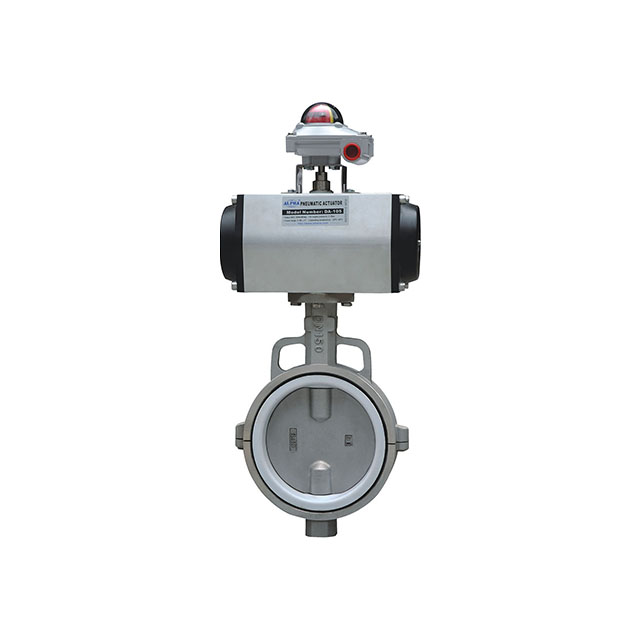
A resilient seated valve, or soft-seated valve, uses a rubber or elastomer coating on the gate or disc to achieve sealing. The flexible material deforms slightly under closure force. It fills surface irregularities and delivers a bubble-tight seal compliant with API 598 zero-leakage standards for liquid and gas testing.
The most common elastomers are EPDM (Ethylene Propylene Diene Monomer) and NBR (Nitrile Butadiene Rubber). EPDM suits water, sewage, and outdoor-exposed applications. NBR performs better with oil-based or petroleum-contact media.
Key Features of Resilient Seated Butterfly Valve
- The resilient seated valve uses EPDM or NBR rubber on gate or disc contacts as a sealing mechanism for the metal seat ring.
- The gate and valve body are made from ductile iron (EN-GJS-500-7) or grey cast iron.
- A triple-O ring with a dust ring at the top is used for steam sealing.
- The operating temperature is limited to ≤80°C for sustained service.
- The valve’s pressure rating is from PN6 to PN16/PN25 (up to 25 bar) per ISO 7259 and EN 1074.
Advantages of Resilient Seated Valve
- The valves achieve consistent bubble-tight, zero leakage with each closure.
- The valves have low operating torque, which makes them easier to actuate. Therefore, reducing gear operator or actuator sizing.
- The valve body is designed without bottom grooves. Thus, there will be no sediment accumulation at the seat.
- The epoxy resin lining is non-toxic and compliant with potable water standards.
- During routine maintenance, resilient seated butterfly valve replacement does not require full disassembly.
- When the elastomer reaches end-of-service, resilient seated butterfly valve replacement involves swapping the gate or disc assembly. This reduces scheduled maintenance costs and shortens pipeline shutdown time.
Disadvantages of Resilient Seated Valve
- The rubber degrades in temperatures above approximately 80°C when exposed continuously.
- The valves get worn out easily in media containing sand, grit, or abrasive solids.
- They are not suitable for high-pressure systems above PN25, where elastomer deformation becomes a risk.
- Not all elastomers resist concentrated acids or solvents. Therefore, chemical compatibility must be verified.
Typical Applications
Resilient seated valves are common in the following applications:
- Since they are certified for potable water under WRAS and NSF/ANSI 61, they are recommended for municipal water distribution.
- Wastewater treatment and sewage pipeline systems.
- Irrigation and agricultural water supply networks
- If they meet UL/FM requirements per NFPA 13, they can be used in fire protection systems.
- Building mechanical services with HVAC and plumbing distribution.
- In food and pharmaceutical processing, FDA-compliant elastomer grades are available.
Metal Seated vs. Resilient Seated Valves: Direct Comparison

The table below summarises the core differences between metal-seated and resilient-seated valves across key performance parameters.
| Parameter | Metal Seated | Resilient Seated |
| Sealing Method | Metal-to-metal contact | Rubber/elastomer on metal seat |
| Sealing Performance | Stable; minor leakage possible at low pressure | Bubble-tight; zero leakage |
| Max Temperature | Up to 425°C (carbon steel body) | Up to 80°C (elastomer limit) |
| Pressure Rating | Up to 5,000 psi / Class 2500 | PN6–PN25 (up to 25 bar) |
| Media Compatibility | Abrasive, slurry, steam, oil & gas, chemicals | Clean water, sewage, mild chemicals |
| Service Life | Long in harsh conditions | Long in clean service |
| Maintenance | Complex – body seat and gate serviced together | Simple – gate/disc replacement only |
| Unit Cost | Higher | Lower |
| Applicable Standards | API 600, API 602, ISO 10434, ASME B16.34 | EN 1074, BS 5163, ISO 7259, AWWA C509 |
Conclusion
B2B procurement teams should follow technical benchmarks when choosing between metal-seated and resilient-seated valves. This will also ensure successful installation and reduce lifecycle costs.
Before ordering the valves, buyers should check if they adhere to standards such as ASME B16.10 or EN 558 series 14/20. Evaluate the 30” Butterfly Valve dimensions to ensure that the valve fits the available flange gap in existing pipework.
Project engineers should also check the butterfly valve catalogue PDF as a benchmark for comparing disc and seat configurations.
Xintai Valve manufactures both resilient seated butterfly valve assemblies and metal seated gate valves that adhere to ISO 9001, CE, and API standards. Our product range spans from DN50 to DN1200 with diverse seat configurations.


