
A fire protection butterfly valve is a quarter-turn rotary valve used in industrial fire prevention systems. Butterfly valves are used in sprinklers, standpipes, and fire suppression piping to start, stop, or isolate water flow.
Engineers and procurement teams specify these valve types due to fast operation, low weight, UL/FM listing, and built-in monitoring. All in a single compact unit.
Internal control valves ensure water reaches the correct zone on time. These valves isolate system zones; failure during a fire event prevents water delivery to active sprinklers.
This guide covers how these valves work, available types, NFPA standard requirements, and common applications. It will also cover tips on how to source wafer-style fire valves for industrial use.
How a Fire Protection Butterfly Valve Works
The core component of a butterfly valve is a rotating disc mounted on a shaft through the center of the pipe body. Its operation is simple. When the disc is parallel to the pipe bore, the valve is open, and flow passes through. Rotating it to a 90° quarter-turn makes it perpendicular to the bore and stops the flow.
That single 90° rotation is the critical operational advantage. Compared to a gate valve, which requires multiple full turns, a butterfly valve opens or closes in one motion. This is extremely important when a system activates during an emergency.
Key construction materials in fire-rated designs include:
- Body: Ductile iron (ASTM A536) for impact resistance and pressure integrity.
- Disc: Stainless steel (SS316) or nickel-plated ductile iron for corrosion resistance.
- Seat: EPDM for water service; NBR for applications with elevated temperature exposure.
Most fire-rated models carry a factory-tested cycle rating of 500,000 operations before requiring fire protection butterfly valve replacement.
Choosing the Right Butterfly Valve for Your Fire System

Selecting the right fire protection butterfly valve depends on the specific piping connection and regulatory monitoring requirements of the system. Below are the recommended types for fire protection systems:
1. Wafer-Style
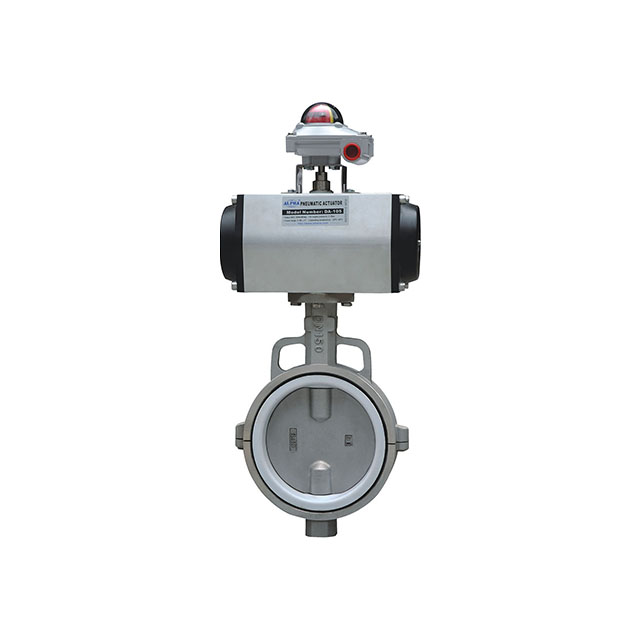
Wafer-style valves clamp between two pipe flanges using through-bolts. They are the lightest and most economical option. They are recommended for systems where the valve will not be exposed to dead-end pressure or frequent disassembly.
2. Lug-Style
Lug-style valves feature threaded inserts around the valve body perimeter. This allows one pipe section to be removed without disturbing the other side. This is necessary for maintenance in dead-end service configurations.
3. Grooved-End (Victaulic-Compatible)
Grooved-end valves use mechanical grooved couplings instead of flanges. This design significantly reduces installation labor and tool requirements. They are the dominant choice in large-scale commercial and industrial fire systems.
These valves are dimensionally compatible with Victaulic fire protection butterfly valve standards. Engineers and contractors now use the Victaulic grooved butterfly valve connection system as the primary standard for fire valve specifications.
When sourcing an alternative, procurement teams also reference the Victaulic valves catalog for pressure class, end connection dimensions, and supervisory switch configurations.
4. OS&Y (Outside Screw and Yoke)
The rising threaded stem gives a clear visual indication of whether the valve is open or closed. This design is commonly specified for fire risers and main control valve positions. It allows inspectors to confirm valve status visually without relying solely on electronic signals.
5. Supervisory Switch-Equipped
Valves with integrated tamper switches connect directly to the building fire alarm control panel (FACP). If someone closes this valve when it should be open, the panel generates a supervisory alarm. NFPA 72 requires this wired supervision on all control valves in monitored fire protection systems.
Common Applications in Industrial Fire Systems
In fire protection butterfly valve installation, engineers specify this valve type across the following system types:
- Wet-pipe and dry-pipe sprinkler systems: zone isolation control valves per NFPA 13.
- Standpipe systems: floor-by-floor water distribution control in high-rise and multi-story industrial buildings.
- Fire pump discharge and suction lines: flow control per NFPA 20 requirements.
- Deluge and foam-water spray systems: fast-acting zone activation control.
- Preaction systems: double-interlock control valve positions.
- Backflow prevention assemblies: isolation on either side of the backflow preventer.
- Inspect test valves and drain valves: secondary system testing points.
NFPA Compliance Requirements
Adhering to NFPA standards ensures system reliability and legal compliance in fire protection. These regulations dictate everything from component certification to rigorous maintenance schedules.
Understanding the specific requirements of NFPA 13, 20, 25, and 72 ensures your butterfly valves operate correctly during a critical fire event.
NFPA 13 – Sprinkler System Installation
NFPA 13 mandates UL-listed or FM-approved control valves for all sprinkler systems. The standard requires supervised butterfly valves to ensure they remain open. Installing non-listed valves violates safety codes, regardless of cost or availability.
NFPA 20 – Fire Pump Systems
NFPA 20 regulates butterfly valves on pump suction and discharge lines. The standard mandates a slow-close valve design to prevent “water hammer” during pump operation. It also bases minimum valve sizing on hydraulic flow calculations rather than nominal pipe diameter alone.
NFPA 25 – Inspection, Testing, and Maintenance
NFPA 25 sets the maintenance schedule that facility managers and AHJs enforce:
- Monthly: Confirm all control valves are in the open position; verify supervisory devices are functional.
- Quarterly: Operate each valve through its full stroke range to prevent disc seizure.
- Annual: Test supervisory switch signal at the FACP; document results for AHJ review.
NFPA 72 – Fire Alarm and Signaling
NFPA 72 requires contractors to wire butterfly valve tamper switches directly to the FACP. An unwired switch creates a code deficiency that fails inspection. Always confirm complete wiring during system commissioning.
Fire Protection Butterfly Valve Installation Reminders
Before installing a fire protection valve, make sure you have the compatible components and valve types.
A butterfly valve, Victaulic type, is a dominant supplier of fire protection butterfly valves. However, before ordering a fire protection valve, always check the Victaulic 705 butterfly valve PDF specification guide if it is compatible with your project. Also, verify the Victaulic butterfly valve price benchmarking guidelines if it fits your budget.
Keep in mind these reminders before installation:
- Verify valve and ratings: Check if the valve is UL or UL-FM listed for fire-protection service. It should also match the required ANSI/EN class and pressure ratings.
- Use the correct end-type and piping configuration: Use a wafer type to install between two flanges. Lug type is used for dead-end service. Utilize grooved type for fire-piping. Ensure that the groove/pipe diameter, flange rating, and gasket are compatible with the valve. If they don’t match, leakage or misalignment may occur.
- Orientation and clearance: The valve should be installed without hitting pipe ties and other structures. Avoid installing the handle or actuator where it will conflict with ladders, walkways, or access doors. The operation should always be kept clear and accessible.
Conclusion
When it comes to fire safety, the grooved-end fire valve is the primary flow control component. These valves are used in industrial sprinkler, standpipe, deluge, and pump systems.
The valve’s quarter-turn operation, compact form factor, and UL/FM listing make this valve a versatile choice. These features, combined with built-in supervisory capability, make it the default specification for engineers working to NFPA 13, 20, 25, and 72.
Reliable fire protection depends on prioritizing code compliance and NFPA 25 maintenance over price when selecting valve specifications. Procurement teams ensure system integrity by precisely matching the required pressure class, connection types, and supervisory switches.


