
Steam service is tough on valves. Heat, pressure, and frequent startups/shutdowns keep pulling on the body, bolting, and seals. Problems that never show up in cold-water duty, such as small leaks, loosening joints, and sealing drift, can become “normal” over time on a hot steam line. For buyers, the body manufacturing route isn’t just a factory detail. It affects how stable the valve remains after years of thermal expansion and contraction.
A forged steel ball valve is commonly selected when plants want tighter control over body integrity in demanding steam duty. For Xintai’s baseline comparison, see Forged Ball Valves vs Casting Ball Valves.
What changes between forged and cast bodies
Density and discontinuity risk (plain-language view)
Forging shapes metal under force. When done correctly, this tends to produce a more uniform structure and reduces the likelihood of internal discontinuities. Casting pours molten metal into a mold. It’s efficient for complex shapes and larger sizes, but quality depends heavily on controlling porosity, shrinkage, and inclusion risks.
In steam service, repeated thermal cycles can turn small internal issues into long-term weak points.
Joints, assembly, and leak paths
In steam lines, the most common pain is usually leakage (not a dramatic failure). For example:
- Packing seepage after repeated heating and cooling
- Flange leaks as bolting load changes
- Seat leakage after thermal cycling and wear
Reducing avoidable leak paths and using repeatable assembly practices helps cut recurring maintenance.
Creep: the long-term driver in hot steam service
What does creep mean in practice
Creep is a slow, time-dependent deformation under stress at elevated temperature. In long-run steam systems, creep can relax bolting load and shift alignment over time. That can reduce sealing force and increase retorque frequency, especially with repeated startup/shutdown cycles.
Why forging can help in high-cycle steam duty
A forged body can provide more consistent mechanical properties and stability under sustained thermal stress. The benefit isn’t just “strength.” It’s often less drift in sealing conditions over time, which can reduce repeat maintenance work.
Steam application matrix: where each option fits
Use this as a screening tool before you finalize materials, class, and end connections.
| Decision factor | Forged body (typical benefit) | Cast body (typical benefit) |
| Frequent start/stop cycling | Better fatigue stability in hot service | Acceptable if cycling is limited |
| Long high-temperature exposure | More stable properties in demanding duty | Depends strongly on grade + QC |
| Large sizes / complex geometry | Limited by the forging size economics | Strong option for large/complex bodies |
| Procurement cost | Often higher | Often lower |
| Downtime and rework exposure | Often lower for critical points | Can be higher if the service is harsh |
If the application is pressure-driven as well, align selection with Xintai’s guidance: Everything About High Pressure Valves.
Practical spec checks for high-temperature steam
Confirm these items before ordering
To avoid rework and repeated shutdown fixes, confirm:
- Pressure class at the actual steam temperature (not only ambient)
- Body and trim materials matched to steam conditions
- Seat limits for temperature and cycling
- Packing type and gland design for repeated thermal movement
- Test requirements and documentation (hydro/pneumatic as required)
- Traceability (MTCs, heat numbers, QA records)
If your steam system also has aggressive pressure swings, a high pressure ball valve selection should prioritize body integrity, packing performance, and verified testing, not only nominal class.
Selection guide: forged vs cast for steam reliability
Choose a forged steel ball valve when:
- The steam temperature is high, and the run hours are long
- Cycling is frequent (daily starts, batch operation)
- Leakage leads to expensive downtime, safety exposure, or compliance work
- The valve is a critical isolation point
Choose cast steel when:
- Size and geometry favor casting
- Cycling is limited, and service history is stable
- Supplier inspection and QA controls are strong and repeatable
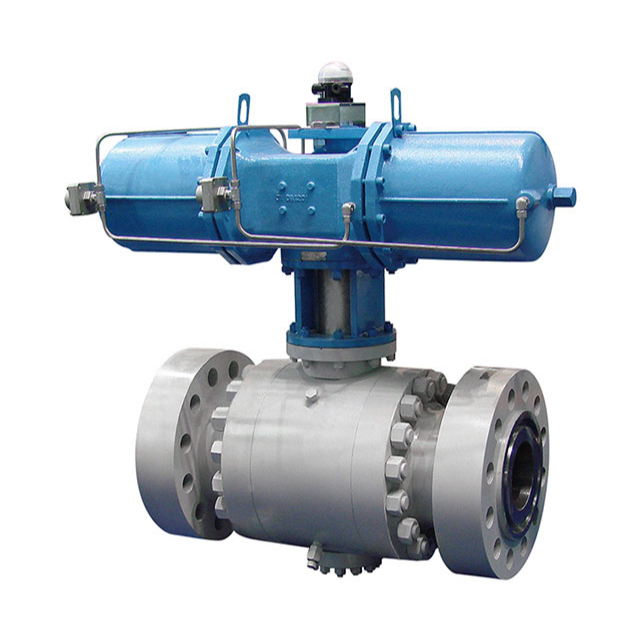
In procurement terms, many steam systems can use a carbon steel ball valve in the correct class. The real difference is whether the body structure and QC controls stay stable under heat and cycling.
Conclusion
High-temperature steam stresses valves through heat, pressure, and cycling. When the line runs hot for long periods or cycles often, the structural consistency of a forged steel ball valve can reduce leakage and cut repeat retorque work. Cast bodies can still be a practical choice, especially at larger sizes, but performance depends more on supplier process control and inspection quality.
3 Key Takeaways
- Steam cycling and long hot exposure amplify creep effects and sealing drift.
- Forged bodies are often selected for critical steam points where stability matters.
- Choose based on cycling frequency, temperature exposure, pressure swings, and QC control.
FAQs
Why does forging matter for steam valves?
Forging can produce a more uniform body structure, which supports stability under heat and repeated cycling.
Is cast steel always a poor choice for steam?
No. Cast steel can perform well when cycling is limited, and supplier quality control is strong.
What causes steam valve leaks over time?
Common causes include packing wear, bolt load relaxation, thermal movement, and creep-related sealing changes.
How can I reduce steam valve maintenance frequency?
Standardize packing specs, confirm temperature ratings, use repeatable torque practices, and require traceability and test documentation.
When should I choose forged over cast?
When steam service is high temperature, cycles frequently, or downtime impact is high, forged is often preferred for critical isolation points.


