
Industrial globe valves, in the context of architectural design, treat the disc as the unit’s mechanical heart. Surely, the valve body directs the flow, and the stem provides motion; the disc is the main component that dictates the connection between the seat and the fluid.
Unlike gate valves, which are designed primarily for on-off service, globe valves use a variety of disc designs to manage the high-velocity turbulence and pressure drops inherent in heavy-duty piping systems.
1. What is the Function of the Disc in Throttling and Shut-Off?
Industrial globe valves obstruct the fluid path by regulating the fluid flow. As the stem moves the disc toward the seat, the flow area is reduced, allowing energy to dissipate and regulating flow rates. This process, known as throttling, requires the disc to withstand significant kinetic energy without vibrating or eroding.
Beyond regulation, the disc must also perform a critical shut-off function. This dual-purpose requirement—surviving the erosive forces of high-pressure throttling while maintaining the integrity for a tight shut-off—is why material selection and disc geometry are the most scrutinized aspects of cast steel globe valves.
2. Ball Discs: Best for Minimal Throttling

The ball-style disc is the most common design found in standard industrial globe valves, especially those intended for low-pressure or general utility service. It features a short, tapered, or spherical seating surface that makes point-contact with the seat. Because the contact area is narrow, the ball disc is highly effective at breaking through small amounts of scale or debris on the seat to achieve a seal.
As a global valve manufacturer, we have supplied globe valves to international clients in the US for a low-pressure produced water system. There was a mineral buildup that prevented a complete shut-off. The ball disc effectively provided a zero-leakage seal.
Take note, though, the ball disc is primarily intended for on-off service or very limited throttling. If held in a partially open position for extended periods, the narrow seating area is susceptible to “wire-drawing” or erosion. For systems requiring globe valves for flow control at minimal increments, the ball disc is often bypassed in favor of more robust geometries.
3. Plug Discs: The Choice for Precise Regulation

For applications requiring rigorous regulation and high-pressure differentials, the plug disc is the industry standard. This design features a long, tapered plug that fits deeply into the seat orifice. Because of its elongated shape, a significant change in stem position results in a relatively small change in flow area, allowing for incredibly precise “equal percentage” or linear flow characteristics.
The plug disc is the preferred choice for globe valves for flow control because it distributes the erosive force of the fluid over a much larger surface area than the ball disc. This makes cast steel globe valves equipped with plug discs highly resistant to the effects of high-velocity flow and cavitation. Furthermore, the deep engagement between the plug and seat provides a wide sealing surface that maintains its integrity even after years of abrasive service.
Manufacturers can customize to offer specific floe curves. The linear type is suitable for liquid-level controls, while the equal-percentage type is usually used for pressure control applications.
4. Composition Discs: Achieving Bubble-Tight Shut-Off

While metal-to-metal seats are durable, they often struggle to achieve a “bubble-tight” seal in gas service or low-viscosity fluid applications. The composition disc solves this by using a non-metallic insert—typically PTFE, rubber, or a specialized synthetic polymer—secured into a metal carrier.
This design allows the disc to “deform” slightly against the metal seat, compensating for minor surface irregularities or particles. Composition discs are essential in industrial globe valves where zero leakage is mandatory. However, they are generally limited to lower temperatures and pressures than all-metal designs. In cast steel globe valves, composition discs are frequently used in air, gas, and treated water systems where isolation is the priority rather than high-temperature throttling.
Most of our clients choose PTFE as it’s the benchmark for chemical resistance. It can withstand temperatures up to 200°C and is suitable for steam and aggressive chemicals. In the oil and fuel industries, Buna-N valve material can be ideal, but it can only operate at temperatures below 120°C.
5. How to Select the Right Disc for Your Media
Choosing the correct disc design requires analyzing the fluid medium’s physical properties. For steam service, the erosive nature of high-temperature vapor usually mandates a hardened cast-steel globe valve plug disc to prevent rapid seat degradation. In contrast, viscous fluids like heavy oils may be better managed with a ball disc that offers a clearer path once fully opened.
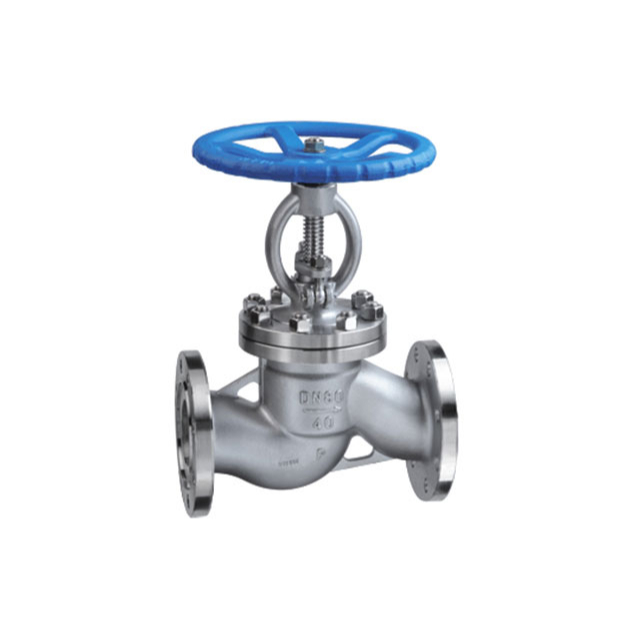
According to records, about 40% of valve failures are due to the wrong choice of discs. This means a facility cannot just go ahead and order 100 globe valves when, in fact, its system needs plug discs. It’s best to communicate with the manufacturer for the best option.
It’s also crucial for procurement teams and engineers to consider the ratio of the maximum flow to the minimum controllable flow. When the disc type is perfectly aligned with the medium’s specific demands, the standard longevity and stability are guaranteed for globe valvesfor flow control.


