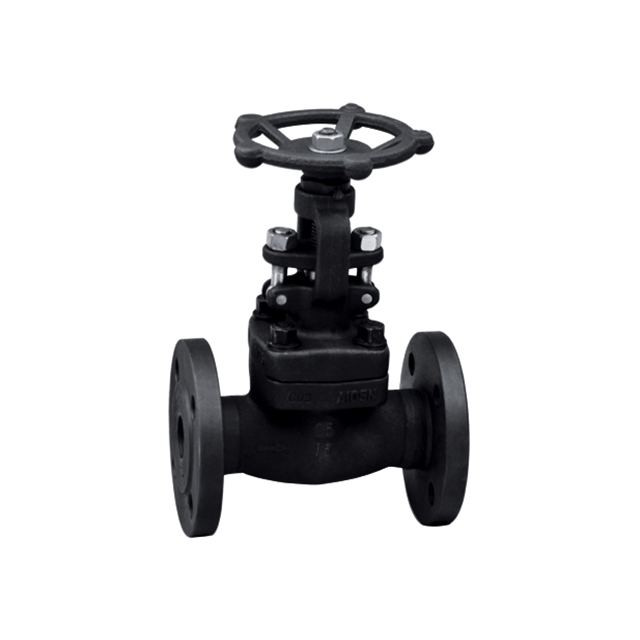
Industry experts say the gold standard for high-pressure durability is the forged steel globe valve. However, the forged globe valve’s dense molecular structure imposes specific maintenance requirements compared to standard valves.
To ensure these components survive their full design cycle in extreme environments, a proactive “how-to” approach is essential. This guide outlines the critical maintenance pillars that help globe valve suppliers and their clients protect their infrastructure investments.
1. What are the Characteristics of Forged Valve Bodies?

A forged steel globe valve is known for its excellent strength, the absence of internal porosity, and dense structure. These qualities make these valves highly resistant to leaks and high-pressure surges and provide excellent durability compared to other cast alternatives.
This density signifies that the hardware is often used in High-Pressure Feedwater or Main Steam systems. With this, it’s crucial for maintenance teams to check for external stress-corrosion cracking (SCC). This happens when valves are exposed to rapid temperature cycles and corrosive environmental conditions simultaneously.
Early detection of these components enables globe valve suppliers to make the necessary alloy upgrades before hardware problems occur. Some prefer the F316 stainless steel for its high molybdenum content.
2. Routine Packing and Gland Adjustments

The stuffing box is the primary maintenance zone for any forged globe valve. Because these valves handle extreme pressure differentials, the packing material is under constant stress. Over time, the packing may consolidate, leading to small “weeping” leaks at the stem.
Technicians should perform routine gland adjustments. Evenly tighten the gland nuts clockwise using a calibrated wrench. The gland follower must be leveled, as uneven tightness can cause it to tilt and score the stem. A scratched stem indicates a valve leak, regardless of the packing tightness. For distributors, emphasizing “preventative tightening” over “reactive tightening” is key advice for end users.
Installing the ‘live loading’ system, like Belleville spring washers, is ideal for severe service applications. The spring ensures a constant load on the packing even if the stem expands due to thermal cycles. This hardware serves as a buffer to prevent overtightening during leaks, which often occur in a crushed packing.
3. How to Prevent Internal Corrosion and Pitting?
Internal integrity is the hallmark of high-quality globe valve suppliers. Even with a forged body, the internal “trim”—the disc and seat—is susceptible to localized pitting. This usually happens when stagnant fluid remains in the valve during downtime.
To prevent this, implement a “cycling” schedule where the valve is fully opened and closed at least once a month. This will flush out debris and prevent mineral deposit buildup on the seating surfaces. If the valve is used for throttling, inspect the disc for “wire-drawing,” which appears as tiny, jagged lines on the metal.
When valves are used for frequent throttling, a simple visual assessment is not sufficient. Facility managers and technicians must perform DPI (dye penetrant testing) to determine ‘wine drawing. These are jagged, small erosion lines caused by high-velocity fluid that cut through the seat. Detecting these lines early is crucial so maintenance teams can refurbish the hardware. Ignoring such an issue means failing to provide a positive shut-off.
4. Stem Lubrication and Thread Care
The stem of a forged steel globe valve serves as the mechanical bridge between the handwheel and the fluid. Because forged valves are often located in high-temperature areas, the grease on the stem threads can bake and harden into a “crust” that attracts abrasive dust.
Besides adding more grease, effective thread care also involves wiping threads with solvent to remove grit-filled lubricant. A fresh layer of high-temperature anti-seize grease (molybdenum-based) can now be applied. Doing this right ensures the yoke nut won’t strip, a common issue that can render a forged globe valve inoperable during an emergency shutdown.
Technicians must perform stem lubrication and thread cure quarterly, especially in outdoor coastal environments and high-pressure systems.
5. Predictive Maintenance Schedule
Top-tier globe valve suppliers advocate for a predictive rather than reactive approach. By monitoring the “break-to-open” torque—the force required to move the valve from the fully closed position—operators can detect internal scaling before it becomes a problem.
A standardized predictive schedule should include:
- Monthly: Visual inspection for gland weeping and stem thread cleanliness.
- Quarterly: Lubrication of the stem and yoke nut.
- Annually: Ultrasonic testing of the seat to ensure zero internal leakage.
Most maintenance teams keep track of the metrics above. This allows them to schedule repairs on planned outages. Doing so avoids the costly emergency shutdowns. Also, these technicians follow specific maintenance processes to ensure the forged steel globe valve is functioning efficiently and adhere to industrial safety standards.