
The operation efficiency in most industries often depends on the integrity of valve components, which work together to control fluid flow precisely and efficiently.
From water treatment plants to manufacturing facilities, fully-maintained valve parts ensure that processes run smoothly and safely.
Understanding these valve components is crucial for engineers, maintenance professionals, and anyone working with fluid systems.
In this article, we’ll take a deep dive into the various valve parts, from the valve body to the valve trim, and examine the function of the valves.
By understanding the role of each component, you’ll gain insights into how valves operate, their maintenance needs, and why they are so essential to various industries.
5 Valve Components
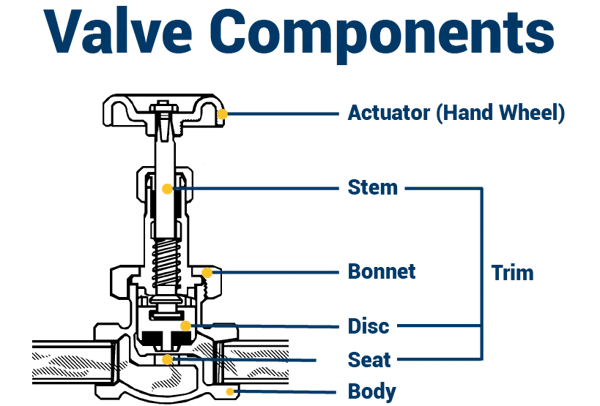
Each valve is made up of a series of critical components that come together to control the flow of fluids or gases in a system.
These valve components ensure that the valve functions correctly, handles pressure, and operates smoothly for its intended purpose.
Below, we’ll break down the key valve parts and their specific roles:
#1. Valve Body
The valve body is the primary structure of the valve and the most substantial component. It houses the valve’s internal components and is responsible for directing fluid to the valve’s inlet and outlet ports.
The material used for the valve body can vary depending on the application, from stainless steel in corrosive environments to cast iron in general industrial uses.
The valve body is essential for ensuring the integrity and durability of the valve under high-pressure or high-temperature conditions.
#2. Valve Bonnet
The valve bonnet is the component that covers the valve body and houses parts like the valve stem and packing.
It seals the valve body, keeping internal parts protected from external contaminants. The bonnet is critical for maintaining a secure enclosure and facilitating the smooth operation of the valve.
Additionally, bonnets often house the actuator in automated valves and provide a place for external control systems to connect.
#3. Valve Stem
The valve stem is a long, vertical component that connects the actuator or handwheel to the internal valve parts.
When the actuator or handwheel is turned, the valve stem moves to open or close the valve, controlling fluid flow.
This component is crucial for transferring motion and ensuring the valve’s operation. The valve stem valve plays an integral role in the control of the valve’s position and function.
#4. Valve Trim
The valve trim refers to the internal working parts that regulate fluid flow inside the valve, typically including the valve seat, disc, stem, and bonnet.
The trim is vital for controlling how the fluid moves through the valve. High-quality valve trim ensures that the valve operates efficiently, provides a tight seal, and controls flow accurately.
This section often wears down over time due to constant exposure to the fluid being regulated, so proper maintenance and replacement are necessary for continued valve function.
#5. Valve Seat
The valve seat is the sealing surface that ensures a tight closure when the valve is closed. This component is critical for preventing leaks and is often made from materials that can withstand high temperatures, pressures, and corrosive fluids.
The valve seat works with the disc (or plug) to create a sealed area when the valve is not in operation, ensuring no leakage of the fluid.
Valve Disc Types
The disc or plug is one of the most important components in a valve as it directly controls the flow of fluid.
The design of the disc is important because it determines the performance, pressure resistance, and overall operation of the valve.
There are several types of discs used in valves, each suited to different applications.
#1. Butterfly Discs
A butterfly disc is used in butterfly valves and has a circular shape with a central shaft. This design allows for quick and efficient flow regulation.
Butterfly discs are lightweight and operate with minimal resistance, making them ideal for applications where flow control is crucial but space and weight are limited.
#2. Ball Discs
A ball disc is used in ball valves and is a spherical component with a hole in the middle. This hole rotates to allow or block the flow of fluid, making the ball valve ideal for on/off control with minimal pressure drop.
The ball disc offers a tight seal, ensuring reliable performance in a variety of industrial applications.
#3. Gate Discs
A gate disc is used in gate valves and features a flat, rectangular shape that moves perpendicular to the flow of fluid.
Gate valves are ideal for full-flow applications where the valve is either fully open or fully closed.
The gate disc is designed to provide minimal resistance when fully open, ensuring that the fluid flows freely through the system.
#4. Plug Disc
A plug disc is typically used in plug valves and has a cylindrical shape with a tapered end. This disc type is designed to rotate within the valve body to regulate fluid flow.
Plug valves offer precise flow control, particularly in systems requiring frequent adjustments.
#5. Globe Disc
A globe disc is used in globe valves and has a more conical shape, which allows for finer flow regulation.
The globe disc is designed to control the rate of flow through the valve, offering highly accurate control in systems where precise flow adjustments are necessary.

Discover the right industrial valve for your needs—contact us for a tailored quote!
More Valve Components FAQs
How many parts does each valve have?
Each valve can have numerous parts, depending on its design. Common components include the valve body, bonnet, stem, trim, seat, disc, and actuator. Larger, more complex valves may include additional parts like the packing gland, actuator, and spring.
What is the top part of the valve?
The top part of the valve is usually the bonnet or the actuator. The bonnet covers the valve body and houses critical components like the stem and packing, while the actuator may be mounted on top to automate the valve’s operation.
What is the difference between a valve and an actuator?
A valve regulates the flow of fluid, while an actuator is a device that controls the movement of the valve. The actuator can be manual (such as a handwheel) or automated (such as a pneumatic or electric motor) to open or close the valve.
What is the trim of a valve?
The trim of a valve refers to the internal parts that are in direct contact with the fluid. These parts, which include the seat, stem, disc, and bonnet, determine how the valve operates and controls fluid flow. Trim parts wear over time and may need to be replaced during valve maintenance.
Valve Components: Conclusion
Understanding the components of a valve is key to choosing the right valve for your system, whether you’re designing an industrial fluid control system or maintaining an existing one.
From the sturdy valve body to the precise valve trim, each part plays a crucial role in regulating flow, pressure, and temperature.
Regular maintenance and careful selection of valve components ensure optimal performance and longevity, making valves a cornerstone of industrial systems worldwide.
By knowing the function of the valve parts and how they work together, you’ll be better equipped to address system needs, prevent failures, and optimize performance.


