
Specific organizations establish specific frameworks to ensure performance and safety. They are the British Standards Institution (BSI), the American Petroleum Institute (API), and the American Society of Mechanical Engineers (ASME). These global benchmarks ensure the global and processing energy industries won’t suffer safety risks and catastrophes.
An efficient piping system requires adherence to such industry standards. Specialists and engineers know that navigating the landscape of the industrial globe valves means understanding global standardization bodies.
1. What are the Global Standardization Bodies?
Global standardization bodies are international institutions that act as the architects of industrial safety. They set the rules of engagement for valve manufacturers to ensure that products on a continent can seamlessly integrate into a system designed elsewhere. Authorities such as the ASME focus on mechanical design and pressure boundaries.
Meanwhile, the API curates standards for the tough conditions of the gas and oil sector, and ISO provides international alignment. Compliance with such standards means industrial globe valves are subject to requirements on wall thickness, testing protocols, and material specifications.
2. API 623: The Heavy-Duty Standard
The API 623 globe valve standard is the industry’s response to the need for high-performance, heavy-duty service in the petroleum and natural gas sectors. It’s the globe-valve equivalent of API 600, the gate-valve standard. The API 623 requires a larger stem diameter and thicker walls than those of general-purpose valves.
Among the distinct features of an API 623 globe valve is the requirement for a guided disk. Instead of the disk vibrating under high-velocity flow as in basic designs, the API 623 valve maintains a stable disk throughout its travel. This prevents “seat chatter” and the premature wear of sealing surfaces. This type of valve ensures stability on the disc throughout its full travel, resulting in a smoother operation.
Reliable, experienced manufacturers recommend API 623 valves made from high-strength materials. The hardware often features a satellite-hardened trim to meet industry durability expectations. In fact, industrial plants in Southeast Asia use such valves, with them being resilient to fluctuating temperatures.
3. Where is the BS 1873 specification used?
This represents the classic benchmark for a steel global valve, usually used in petroleum and allied industries. While more recent projects search for API 623, the BS 1873 globe valve standards remain the legacy standard for flagged and butt-welding end valves. It covers valve sizes from 15mm to 60mm and pressure classes of 150 to 2500.
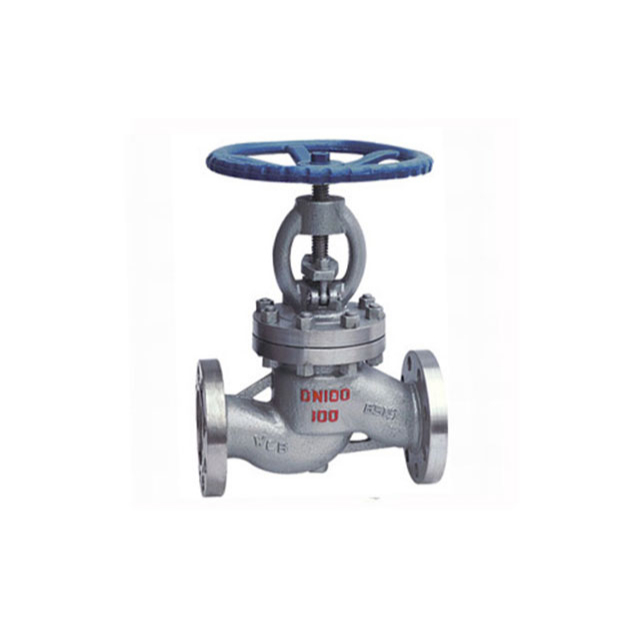
The BS 1873 globe valve is characterized by its “S-shaped” flow path, which, while creating a higher pressure drop, enables superior throttling control required in refined product lines. This standard specifies details for the bolted bonnet, outside screw and yoke (OS&Y), and the rising stem. Valves complying with BS 1873 can effectively deal with thermal expansion and contraction, which usually occur in refinery operations, without losing seat tightness.
To put this into context, it was discovered in a utility steam plant that existing valves failed due to excessive throttling. Recommending the BS 1873 S-shaped flow path fosters a higher pressure drop and provides the required grip for stable regulation.
4. ASME B16.34: Pressure-Temperature Ratings
ASME B16.34 is an umbrella standard that defines the pressure-temperature ratings for most industrial globe valves. This is the most critical document for a design engineer, as it dictates the “service limit” of the valve based on the material of construction.
Under ASME B16.34, valves are grouped into material categories (such as Group 1.1 for carbon steel). A valve rated Class 300 will have a significantly different maximum allowable pressure at 100°F than at 800°F. Whether you are installing a BS 1873 globe valve or an API 623 globe valve, the body’s ability to hold pressure is ultimately governed by the physics-based calculations in ASME B16.34.
A specific power plant in Eastern Europe discovered that using Class 600 valves led to leakage at the bonnet joints. The audit revealed that the pressure was within the limit at ambient temperatures. However, the operating temperature of 450°C had re-dated the body of the carbon steel. Replacing this with an ASTM A217 WC6 valve ensures higher strength at elevated temperatures.
5. What are DIN and ISO Certifications?
In European and international markets, DIN (Deutsches Institut für Normung) and ISO (International Organization for Standardization) impose the equivalent framework for globe valve design. ISO 12149 and DIN EN 13709 are commonly cited for steel globe valves. They differ relatively from their American equivalents in terms of measurement systems (metric vs. imperial) and pressure designations (PN ratings vs. ASME Classes).
For example, a PN 40 valve is roughly equivalent to a Class 300 valve, though the flange dimensions and face-to-face lengths are not always identical. ISO standards are increasingly popular because they aim to harmonize the best practices of both the API and DIN worlds. For a global manufacturer, building a valve that meets both API 623 globe valve and ISO requirements is the gold standard for market accessibility.
In terms of flange differences, both are physically incompatible. They have mismatched bolt circle diameters, raised-face heights, and hole counts.

6. MSS-SP Standards for Specific Trims
The Manufacturers Standardization Society (MSS) provides “Standard Practices” (SP). It fills the gap left by ASME and API documents. The MSS-SP-25 (Marking Systems) and MSS-SP-61 (Pressure Testing) are essential standards for globe valve quality control. Meanwhile, in design, MSS-SP-42 is the commonly used standard for corrosion-resistant industrial globe valves in low-pressure classes.
MSS-SP standards help clarify the exact hard-facing requirements and material grades for the internals to ensure they match the body’s longevity. By using MSS guidelines, a procurement team can ensure that even a standard bs 1873 globe valve is equipped with a trim that can handle specific corrosive mediums without needing to upgrade to a fully exotic alloy valve.
Among our clients is an Australian mining company dealing with internal pitting and having to replace valves every six months. Instead of upgrading to a costly Hastelloy, our experts recommended a standard stainless steel body. The only upgrade necessary was the hazard-faced alloy.
7. How to Choose a Standard Based on Project Locale
In North and South America, as well as the Middle East, API 623 globe valve and ASME standards dominate the landscape due to the historical influence of the US petroleum industry. Designing a facility in these regions using DIN standards can lead to major headaches during piping installation due to mismatched flange holes.
Conversely, projects in Europe, Russia, and parts of Asia often default to ISO or DIN equivalents. When selecting industrial globe valves, the engineer must also consider the “Insurance and Safety Audit” requirements of the specific region. General steam services usually use the BS 1873 globe valve. Meanwhile, for hydrocarbon lines above Class 600, an API 623 valve must be used.
Conclusion: The Path to Compliance
Navigating the seven critical standards for globe valve design is a hallmark of professional engineering. Whether you are adhering to the legacy requirements of a BS 1873 globe valve, the heavy-duty mandates of an api 623 globe valve, or the global reach of ISO, these documents are the only way to guarantee system safety.
By grounding your selection in industrial globe valves that meet these rigorous benchmarks, you ensure that your flow control system is not just functional but built to the highest global expectations of quality and durability.


