
Selecting the right valve for steam service is a critical decision in industrial piping. Operational efficiency and personnel safety rely on using the right valves. Traditional gate and globe valves have been the industry standard. However, many engineers and procurement teams are now asking, “Can you use butterfly valves on steam?”
This guide proves that, yes, you can use steam butterfly valve units, but with specific technical constraints. Factors to consider are pressure levels, heat resistance, and valve design.
Role of Butterfly Valves in Steam Systems
Steam is a harsh medium because it involves high temperatures. This is a potential for water hammer and needs to be tightly shut off to prevent energy loss.
But a butterfly valve for steam service offers several advantages over the other valve types.
- Quick Operation: Butterfly valves are easier to operate due to their quarter-turn operation. This allows for rapid isolation, especially when paired with high-performance pneumatic or electric actuators.
- Space and Weight Efficiency: A flange butterfly valve is much slimmer than globe valves, so they’ll take up way less room in your pipeline. It reduces the overall weight of the piping system and the need for heavy structural supports.
- Cost-Effectiveness: An industrial-grade butterfly valve is cheaper than a comparable gate valve. This provides a budget-friendly solution without sacrificing reliability.
Steam Service Requirements
On the other hand, steam presents unique challenges that standard valves are not equipped to handle. Below are the possible factors:
- Thermal Expansion: Extreme temperature caused by steam causes metal components to expand. Jamming or cracking may occur if the valve is not engineered with proper clearances.
- Sealing Degradation: When exposed to extreme temperatures, standard soft seals, such as EPDM or NBR, can quickly melt or degrade.
- Erosion and Corrosion: Saturated steam can be abrasive. This can lead to internal leakage if the seat or disc materials are not sufficiently hardened.
When to Use a Butterfly Valve for Steam Service
A butterfly valve for steam is an excellent, cost-effective solution for specific applications. The valves can be used in large-diameter pipelines where space and budget are primary considerations.
Best Use Cases:
- Low-to-Medium Pressure: Use the valves for systems with pressures below 6.4 MPa (approx. 928 psi) or temperatures under 400°C. Also consider the specific model and material.
- Large Pipelines: Butterfly valves have a compact design and are lightweight. Thus, they offer significant installation advantages over heavy gate valves. These valves are preferred in large-diameter steam distribution in HVAC or power plant cooling.
- Quick Shut-off: The butterfly valve’s 90-degree quarter-turn operation allows for rapid isolation. This is vital for system safety.
For existing systems, a steam butterfly valve kit or a steam butterfly valve replacement can often be integrated with minimal structural changes to the piping.
Types of Butterfly Valves for Steam Service

As mentioned earlier, not all butterfly valves can be used for steam service. In fact, using the wrong type in a steam line can result in catastrophic seal failure.
Globe and gate valves remain industry staples. However, you can safely utilise the following options for steam service, provided you adhere to specific operating limits:
- Concentric (Soft-Seated) Valves are commonly used as a water main butterfly valve. The valves rely on rubber liners (EPDM or NBR). These are generally not recommended for steam. Even low-pressure steam can cause the liner to swell, harden, or melt.
- Double-Offset Butterfly Valves are often marketed as “High-Performance” valves. Each has a disc offset from the centre and uses high-grade PTFE or reinforced Teflon seats. The valves can handle saturated steam at lower pressures but have strict temperature ceilings.
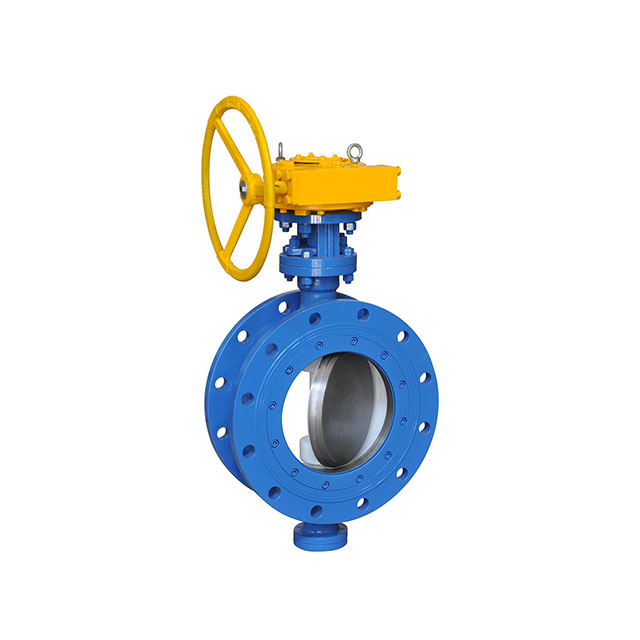
- Triple-Offset Butterfly Valves (TOV) are the preferred choice for steam applications. Their specialised geometry eliminates the friction that usually wears down a seat and seal. By using metal-to-metal design, reinforced with Stellite, these valves stay reliable even when the temperature increases beyond 425°C.
Technical Constraints of Soft-Seal vs. Metal-Seated
A critical factor when choosing a butterfly valve for steam is the sealing mechanism. Using the wrong seal can lead to expansion, degradation, and leaks.
- Soft-Seal Valves: Use these valves for low-temperature steam (typically <120°C) and lower pressures (PN< 1.6 MPa).
- Metal Hard Seal Valves: A metal-to-metal seal is recommended for steam service. The triple-eccentric or triple offset butterfly valve uses hard-faced alloys (e.g. Stellite).
Steam Application Guidelines: When to Use vs. When to Avoid
When looking for a steam butterfly valve for sale, consider these technical thresholds:
- Pressure Ratings: Butterfly valves for steam are typically rated for pressures up to 6.4 MPa. Choose specialised high-pressure globe or gate valves for higher pressure ratings.
- Temperature Limits: Standard high-performance models work well below 400°C. For superheated steam, ensure the body is constructed from Carbon Steel (WCB) or Stainless Steel to prevent thermal fatigue.
- Throttling vs. Isolation: Butterfly valves can be used for coarse throttling. But, they are primarily designed for isolation (on/off service). If your application requires precise, minute adjustments to steam flow, choose a globe control valve.
Material and Installation Specifications
A butterfly valve for steam service should hold up to the constant thermal stress of steam. Therefore, it needs to meet a few critical engineering standards:
- Body Materials: High-strength Carbon Steel (WCB) or Stainless Steel (316 SS) to withstand thermal cycling.
- Connections: The flange butterfly valve is the standard for steam. It provides a secure, leak-proof connection that is easier to maintain than welded alternatives.
- Industry Standards: Look for compliance with benchmarks such as those found in a Mueller butterfly valve pdf or recognised high-quality brands like Watts Butterfly Valves. Ensure all valves meet API 609 face-to-face dimensions and ASME B16.34 pressure-temperature ratings.
Conclusion

Xintai Valves specialises in metal-seated valve solutions engineered for specific thermal challenges. Our range of metal-seated, triple-offset butterfly valves is engineered to provide “bubble-tight” shut-off in the most demanding steam applications.
The modern steam butterfly valve may not replace the globe valves for every high-precision throttling task. However, these valves are a cost-effective alternative for Class 150/300 steam isolation.
Selecting a metal-seated, high-performance design and following strict installation protocols lets you achieve a reliable, long-lasting solution for your steam distribution needs.


