
A gate valve acts as a manual barrier to stop flow completely for maintenance, while a check valve acts as an automatic guard that prevents fluid from reversing direction. You turn a gate valve to isolate a pipe section, but you rely on a check valve to make sure the water only travels one way and never comes back.
It is easy to mix them up if you just glance at the exterior castings, but their jobs are total opposites. One is about control, and the other is about protection.
Difference Between Check Valve and Gate Valve
The main distinction is how they decide to move. A gate valve waits for orders. It requires an operator to spin a handwheel or an electric actuator to turn a stem. It is a bi-directional device, meaning the fluid can rush through it from either side without any problems. It is basically a sliding door.
While gate valves serve different functions than check valves, understanding the nuances of wedge gate valve selection guide helps engineers make informed decisions when gate valves are the appropriate choice for their application.
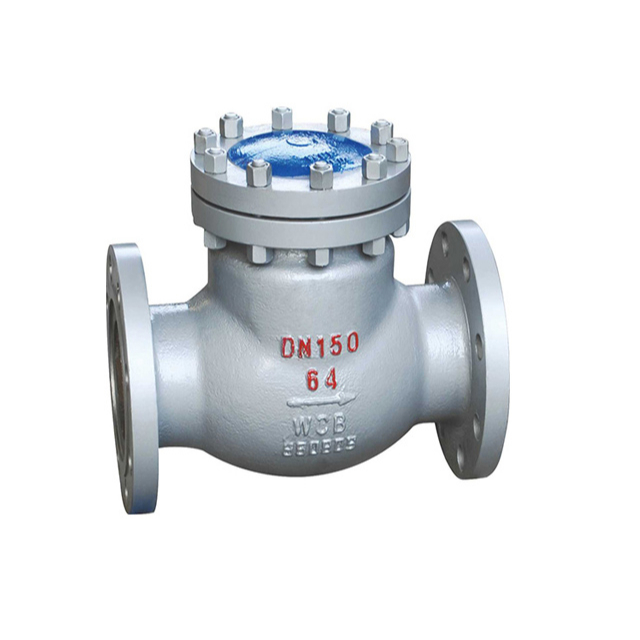
A check valve works on its own. It does not have a handwheel or a stem to turn. It relies entirely on the flow of the liquid to operate. When the pump pushes water out, that force pushes the internal door open. The moment the pump stops, gravity or a spring slams that door shut. This automatic action stops backflow, which could otherwise ruin your pumps or drain your tanks.
When selecting between check and gate valves, engineers must also consider the operating conditions that drive choosing materials for gate valves to ensure reliability across different fluid types and pressures.
When you are looking at a check valve and gate valve side by side, check the body for an arrow. A check valve will always have a flow direction arrow cast into the metal. If you install it backward, the line is blocked. A gate valve has no arrow because it works in either direction.

How They Are Built
If you look inside, the mechanics are totally different. The gate valve uses a threaded stem to slowly lower a metal wedge into the path of the flow. It is not a fast process. You might have to crank that wheel twenty times to get it from fully open to fully closed. This slow operation is intentional because it prevents the pipes from banging, known as water hammer.
The check valve uses a swinging flap or a spring-loaded disc. It is built for speed. As soon as the forward pressure drops, that flap snaps shut instantly. It has to act fast to catch the fluid before it has a chance to reverse course.
Why They Are Always Together
You will almost never find a pump station that does not use both. Engineers typically install a check valve and gate valve as a team.
The standard layout is simple: Pump, then check valve, then gate valve.
The logic here is practical. The check valve sits right after the pump to stop water from draining back down and spinning the pump backward when the motor cuts. The gate valve goes last for maintenance.
Eventually, the check valve will wear out or get stuck. By closing the gate valve, you can cut off the pressure from the main line, allowing you to open up the check valve and fix it without draining the whole system.
Summary
Understanding the roles of a check valve and gate valve keeps your system safe. Use the gate valve when you need to shut down for repairs, and trust the check valve to handle the flow direction automatically.


