
Flow direction in a y-pattern globe valve directly affects pressure drop, erosion, and service life.
If you handle high-velocity steam or water, correct flow orientation is not optional. It determines whether your valve performs smoothly or fails early.
This guide explains how flow direction impacts real systems:
- Cavitation
- Turbulence, and
- Seat wear.
Furthermore, this will also focus on practical operation, especially for demanding high-pressure services. So, read on to learn more.
Anatomy of the Y-Pattern Body
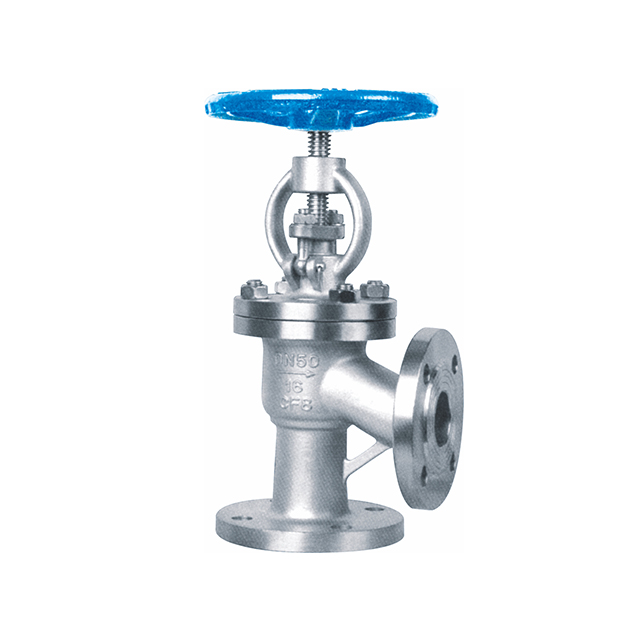
A y-pattern globe valve features a body where the seat and stem are set at an angle. This angle usually ranges around forty-five degrees from the pipeline axis. The design creates a straighter flow path compared to a standard globe valve.
The angled configuration reduces abrupt changes in direction. Fluid enters and exits with less resistance. This lowers pressure drop while maintaining reliable shut-off performance.
Internally, the disc moves linearly against the seat. The stem follows the same angled alignment, which reduces stem side loading during operation. This improves packing life and sealing consistency.
Compared to conventional globe valves for flow control, the Y body style offers a balance between throttling accuracy and reduced turbulence. That balance is why it is preferred in high-velocity service lines.
Why Flow Under the Disc Is Standard
For high-pressure service, flow under the disc is the common installation method. This means fluid enters below the seat and pushes upward against the disc.
When flow comes from below, system pressure assists in lifting the disc during opening. This reduces the required actuator force. It also improves stability during throttling.
More importantly, flow under the disc improves sealing performance when the valve closes. Line pressure pushes the disc tightly against the seat, enhancing shut-off reliability.
In high-temperature steam systems, thermal expansion increases stress on internal parts. Flow under the disc helps maintain consistent seating contact despite temperature shifts.
Flow over the disc may be used in certain low-pressure services. However, for high-velocity steam and water, under-disc flow remains the safer standard.
Minimizing Turbulence and Cavitation
High-velocity service creates two major risks: turbulence and cavitation.
Turbulence occurs when fluid changes direction abruptly. In a standard globe valve, the sharp turns increase flow disturbance. The y-type globe valve reduces this by offering a smoother path.
The angled body reduces sudden velocity shifts. This lowers internal vibration and mechanical stress on the disc and seat.
Cavitation is more serious. It happens when pressure drops below vapor pressure and vapor bubbles collapse. Bubble collapse damages internal surfaces.
To reduce cavitation risk:
- Install the valve with proper flow direction
- Avoid excessive throttling near the closed position
- Match valve size to actual flow requirements
- Maintain correct downstream pressure conditions
Because the y-pattern globe valve lowers overall pressure drop, it reduces cavitation probability compared to traditional designs.
Ideal Applications: High-Pressure Steam and Water
This valve design performs best in high-energy systems.
High-Pressure Steam Lines
Steam moves at high velocity and high temperature. Standard globe valves can cause excessive pressure loss in these lines.
The angled body reduces flow restriction. This maintains efficiency while still allowing accurate throttling.
In the steam isolation and control service, correct flow direction improves seat tightness. It also supports stable operation during load changes.
High-Pressure Water Systems
Boiler feedwater and cooling systems often operate under strong pressure. Rapid flow changes increase turbulence risk.
A y-type globe valve reduces internal disturbance. This protects trim components and extends service intervals.
Because it combines good throttling control with lower pressure drop, it is often selected over gate valves for regulated flow.
The real advantage lies in managing velocity without sacrificing control precision.
Installation and Flow Direction Best Practices
Correct installation ensures expected performance.
Follow these guidelines:
- Confirm the arrow marking on the body
- Install with flow under the disc for high-pressure service
- Avoid oversizing the valve
- Use proper support to reduce vibration
Oversizing increases throttling at near-closed positions. That condition increases turbulence and cavitation risk.
Proper sizing keeps the valve operating within its stable control range.
Comparison: Standard Globe vs Y-Pattern Design
| Parameter | Standard Globe Valve | Y-Pattern Design |
| Flow Path | Sharp angle turns | Angled smoother path |
| Pressure Drop | Higher | Lower |
| High-Velocity Suitability | Moderate | High |
| Cavitation Resistance | Moderate | Improved |
| Throttling Control | Accurate | Accurate with fewer restrictions |
This comparison shows why angled body designs are preferred for demanding flow conditions.
Final Summary
The y-pattern globe valve reduces pressure drop and turbulence by using an angled flow path.
Installing flow under the disc improves sealing, stability, and durability in high-pressure steam and water systems. Proper sizing and orientation help prevent cavitation and extend service life.


