
The maximum pressure for a gate valve depends on its design, material, size, and operating temperature. Standard residential valves are rated for 100 to 200 PSI, but a high-pressure gate valve built for industrial service can sustain pressures above 20,000 PSI in specialized oilfield applications.

What Determines the Pressure Rating
Pressure rating is not a single fixed number. It shifts depending on several factors working together.
Temperature
As operating temperature rises, material strength drops and permissible pressure falls with it.
A valve rated for 5,000 PSI at 100°F may only be safe at 3,000 PSI at 600°F.
Reading the ambient pressure rating alone and stopping there is a specification error that shows up repeatedly in industrial procurement, and one that is entirely avoidable.
Material Construction
Forged steel produces a denser, stronger body than cast steel. For high-pressure steam and hydrocarbon service, forged bodies outperform cast alternatives in both strength and long-term reliability.
Hard-facing on the seat and gate surface is equally important. Materials like Tungsten Carbide and Stellite 6 resist the erosion that high-pressure flow causes at the seating interface. Without them, seat wear accelerates and leakage follows.
Bonnet Design
Bolted bonnet designs have limits in high-pressure service because the fasteners carry the sealing load.
Above a certain threshold, bolt tension alone does not hold.
Pressure seal designs address this by using internal pressure to tighten the seal. The harder the system pushes, the tighter it gets.
Bore Configuration
Full-bore gate valves maintain the same internal diameter as the pipeline. This keeps pressure drop low and allows pipeline pigs to pass through for cleaning. Reduced bore valves are more compact and lighter, but the narrower opening increases flow resistance across the valve. In high-pressure oilfield and pipeline applications, the choice between the two affects both operational efficiency and maintenance access.
Pressure Rating Standards
Industrial gate valves follow two main rating systems.
ASME/ANSI classes run from Class 150 through Class 4500. A Class 150 valve sustains around 285 PSI at ambient temperature. A Class 2500 valve sustains around 6,250 PSI under the same conditions.
PN ratings are used in European and international specifications, running from PN10 through PN400 and representing pressure capacity in bar.
A valve rated for high pressure at 100°F can see that rating drop by half at 800°F. Always read the full pressure-temperature curve, not just the ambient number.
For oilfield applications, API 6A specifies pressure ratings of 2,000, 3,000, 5,000, 10,000, 15,000, and 20,000 PSI, commonly referred to as 2M through 20M. These cover wellhead and surface equipment in oil and gas production, where operating conditions are most demanding.
For more on how these ratings apply across different service conditions, our high-pressure gate valve design guide goes into the specifics by application type.
Pressure Seal Gate Valves
The pressure seal Gate valve is the industry standard for power plants, steam systems, and oil refineries operating above 1,450 PSI.
The bonnet seal tightens as internal pressure increases. Performance improves under the exact conditions in which a bolted bonnet would start to fail.
These valves operate across Class 900 to Class 4500, sustaining pressures from around 2,200 PSI up to 10,000 PSI and beyond. They are also rated for temperatures up to 580°C, placing them throughout supercritical power generation and high-pressure steam applications.
The silver-plated gaskets in pressure seal designs need specific attention during thermal transients. A gasket crushed during rapid temperature changes produces leaks that standard maintenance schedules do not anticipate.
Some pressure seal designs also use non-rising stems to reduce packing wear and operating torque in high-pressure slab gate configurations. Confirm this during specification on applications where frequent operation is expected.
If you are specifying pressure seal valves for cycling service, our pressure seal gate valve breakdown reveals the construction details and what to monitor in service.
How Valve Size Affects Maximum Pressure
Size and pressure move in opposite directions.
As the valve diameter increases, the force acting on the gate grows. Larger valves need heavier construction to sustain the same pressure as smaller ones.
A 6” Gate valve built to API 6A standards can sustain 10,000 to 15,000 PSI in high-pressure oilfield service.
An 8 Gate valve of the same class requires a more substantial body because the larger bore area multiplies the force the gate must resist.
For small bore applications, API 602 covers forged steel gate valves from 1/4 inch to 2 inches, rated up to 10,000 PSI. These are compact, high-strength designs used where space is limited and pressure demands are high.
Large diameter gate valves in high-pressure service often need bypass systems installed. Without one, differential pressure across the gate makes the valve impossible to operate and damages the seat on opening.
Parallel Gate Valves in High-Pressure Steam Service
The Parallel Gate valve uses two parallel discs rather than a wedge to seal against the seat.
This eliminates the jamming effect that wedge-style valves develop in high-temperature steam applications, where thermal expansion locks the wedge against the seat.
Parallel slide designs are well-suited to boiler systems and high-pressure steam lines running frequent thermal cycles. They operate across ASME Class 150 through Class 2500 and require less operating torque than wedge gate alternatives under the same conditions.
Waterworks and Low-Pressure Applications
Not every application calls for industrial-grade pressure ratings.
The Kennedy Gate Valve is built for water and wastewater service, rated to 200 to 250 PSI for standard resilient wedge designs and up to 350 PSI for fire protection series.
The MJ Gate Valve, a mechanical joint design used in underground water installations, operates at 250 PSI working pressure.
Both are reliable for their intended service. Problems start when a waterworks-rated valve ends up in a higher-pressure industrial application because the pipe size does not match. Pressure class and pipe size are separate specifications and need to be treated that way.
High Pressure Gate Valve Replacement: What to Verify
A high-pressure gate valve replacement is not as simple as matching the pipe diameter. Here is how you should proceed with its verification.
Re-check the Pressure-Temperature Curve
Do not rely on the ambient pressure rating alone. Re-verify the maximum system pressure and temperature together before selecting a replacement.
Match Material, Bonnet Style, and End Connections
Substituting A105 forged steel with a cast alternative in high-pressure steam service introduces a failure risk.
Moving from a bolted bonnet to a pressure seal design changes the valve footprint and affects the piping layout around it.
End connections also need to match exactly. Swapping a butt-weld connection for a flanged alternative on a high-pressure line requires piping modifications that are rarely accounted for at the procurement stage.
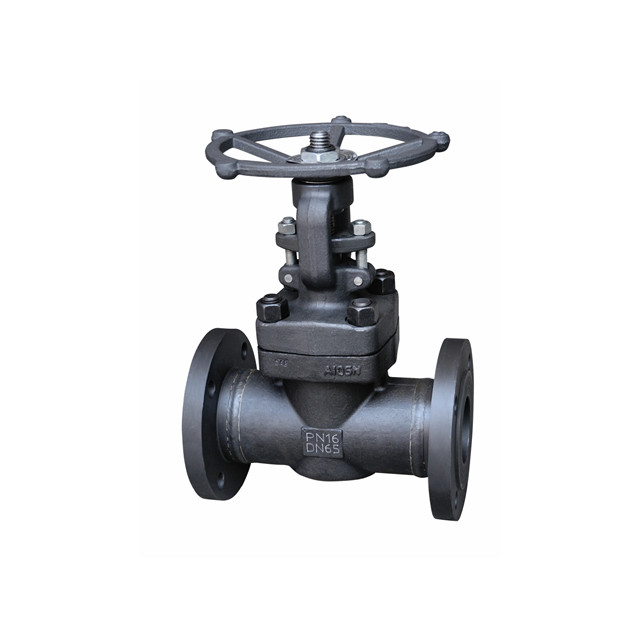
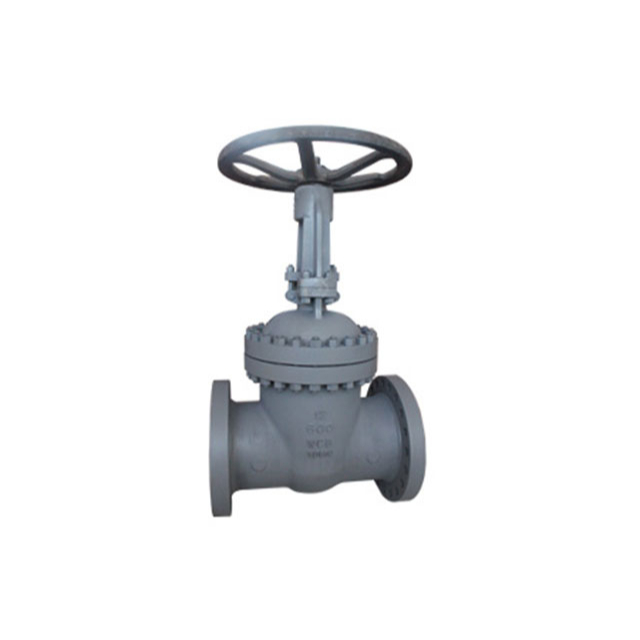
For high-pressure service requiring a forged body, our forged wedge gate valve covers demanding pressure classes in forged steel construction. Where service conditions allow cast construction, the casting wedge gate valve is a cost-effective alternative.
Seat Condition, Packing, and Sourcing
Review the seat condition on metal-seated valves before replacing the entire unit. Renewable metal seats can often be refaced rather than replaced outright.
For temperatures above 232°C, graphite packing is required. PTFE fails at those temperatures and should not be specified above that threshold.
Hydrostatic testing on high-pressure valves runs at 1.5 times MAWP. A 10,000 PSI valve gets tested at 15,000 PSI. Verify that any replacement carries documentation confirming it has been tested to that standard.
When sourcing replacements, the Powell gate valve Catalog lists API 600 pressure seal designs across Class 600 through Class 4500, including wedge and parallel configurations for severe industrial service.
Conclusion

Customize the perfect valve for your project! Get a quote and explore our custom options.
A valve that looks correct on paper but does not match the system’s actual pressure-temperature curve will not last long. In high-pressure service, that failure rarely stops at the valve itself.
If you are working through a gate valve specification and need guidance on the right design for your application, get in touch with our team and we will help you find the right fit.


