
Valve handles are easy to overlook until the wrong one causes a problem. A stripped stem, a gate valve forced into throttling, a wheel nobody can reach. The handle type shapes how the valve gets used day to day, and that has a direct effect on how long it lasts.

Two Ways to Operate a Valve
Every manually operated valve moves by either linear or rotary motion, and that motion determines which handle type works. Lever handles take the valve from fully open to fully closed in a 90-degree turn. Handwheels require multiple full rotations to move the gate or disc through its complete range of travel.
For a broader look at how these components fit into overall valve construction, this guide to understanding valve components covers the terminology and assembly logic behind them.
Lever Handles
Lever handles are the standard on ball valves and butterfly valves. They are fast to operate and give immediate visual confirmation of valve position. Below are the main variations you will encounter.
Ball Valves
The lever attaches directly to the ball inside the valve. Parallel to the pipe means open, perpendicular means closed. That visual confirmation is one reason lever-handled ball valves are common where a quick status check matters.
Lever handles are typically manufactured from stainless steel 316 for corrosion resistance, carbon steel for general industrial service, or high-strength engineered plastics for lighter-duty applications. Material selection should align with the fluid type, operating temperature, and environmental exposure.
Butterfly Valves
Smaller butterfly valves use lever handles, with the 90-degree turn engaging the disc mechanism directly. Larger butterfly valves move to gear-operated handwheels because the force required to operate the disc manually exceeds what a lever can deliver safely.
Lockable Levers and T-Handles
Many lever handles include holes for padlocks, allowing Lockout/Tagout procedures during maintenance. This is a requirement under most occupational safety standards in industrial facilities. The T-handle is a variation used on smaller valves like needle valves and PVC ball valves, offering a more comfortable grip in tight spaces.
A few things to know before specifying a lever handle:
- Fast quarter-turn operation makes them the right call for emergency shutoff situations
- Visual position confirmation is immediate, with no guesswork about whether the valve is open or closed
- Not suited to large valve sizes where operating torque exceeds safe manual limits, generally above DN200 or 8 inches
- Fine flow adjustment is not possible; anything requiring precise throttling needs a handwheel
Handwheel Valves
A handwheel valve requires multiple full rotations to move the gate or disc through its complete travel range. Handwheels appear on gate valves, globe valves, and diaphragm valves. Below are the main types used in industrial service.
Rising Stem
As the valve opens, the stem moves upward through the handwheel, giving a clear visual indication of position. This design is common in gate and globe valves built to ASME B16.34, which governs pressure-temperature ratings for industrial valves across Class 150 through Class 4500.
Non-Rising Stem
The stem rotates in place rather than moving upward, keeping the overall height of the valve fixed during operation. This is the right choice where vertical clearance is limited, such as underground installations or confined mechanical rooms.
Gear-Operated
A reduction gear mechanism between the wheel and the stem increases torque output while reducing the effort required from the operator. For valves above DN200, manual torque requirements often exceed 300 Nm, at which point a gear operator becomes necessary for safe and repeatable operation. These are standard on large butterfly valves and gate valves in high-pressure service.
Handwheels are the right call when:
- Precise flow control matters more than speed of operation
- High-pressure or large-bore applications make lever handles impractical
- Horizontal space is limited, since handwheels need vertical clearance rather than horizontal swing room
- The valve position needs to be held at an intermediate point for extended periods
Lever vs Handwheel: Quick Reference
| Feature | Lever Handle | Handwheel |
| Valve type | Ball, butterfly, plug | Gate, globe, diaphragm |
| Operation | 90-degree turn | Multiple full rotations |
| Speed | Fast | Slow |
| Precision | On/off only | Fine throttling control |
| Torque capacity | Limited, up to DN200 | High, gear-operated above DN200 |
| Space requirement | Low vertical, high horizontal | High vertical, low horizontal |
| Visual position | Immediate | Rising stem only |
| Typical application | Fast isolation, small to mid lines | High-pressure, large diameter lines |
The Handwheel Gate Valve
The handwheel gate valve is built for on/off isolation service in high-pressure and high-temperature pipelines. Turning the handwheel rotates a threaded stem, which lifts or lowers the gate wedge into the flow path.
Fully open or fully closed are the only operating positions. Leaving a gate valve partially open causes turbulence that erodes the seating surface fast.
Handwheel gate valves manufactured to API 600 cover Class 150 through Class 1500 in cast steel construction. For forged steel designs, API 602 applies to smaller bore valves from 1/4 inch through 2 inches. Material grades commonly specified include ASTM A216 WCB for cast carbon steel and ASTM A105 for forged carbon steel, with A182 F316 stainless steel for corrosive service.
The gate valve wheel handle connects directly to the stem and is the primary point of manual control on most industrial gate valves. Handle material should match the service environment, with stainless steel 316 specified for corrosive or hygienic applications and ductile iron where impact resistance is the priority.
For a detailed look at how the wedge mechanism works inside the valve body, this explanation of wedge gate valve operation walks through exactly what happens inside the body when the handwheel turns.

Large Gate Valve Wheel Handle
Standard handwheels run out of leverage on large diameter pipelines. A Large Gate Valve Wheel Handle solves this by increasing the wheel diameter, giving the operator more leverage with the same physical effort.
On valves 24 inches and above, gear operators step in where even an oversized handwheel is not enough. These handles come in cast steel, stainless steel, or ductile iron. Cast iron suits most standard conditions, stainless steel suits corrosive or hygienic environments, and ductile iron is specified where the handle is likely to take physical knocks in service.
Chain wheels are a variation used on elevated pipelines. A chain loops around the wheel rim and hangs to floor level, allowing operators to turn the valve without climbing.
Gate Valve Handle Extension
A Gate valve handle extension is a rotating rod that connects to the handwheel and relocates the operating point to an accessible position. Underground installations use long T-shaped extension rods so operators can turn the valve from the surface. Tight mechanical rooms use them where the handwheel sits behind equipment that cannot be moved.
Gate Valve Key
A Gate Valve Key is a T-shaped tool that fits over an operating nut on the valve rather than a permanent handwheel. It provides leverage for operation while keeping the valve tamper-resistant since there is no permanent handle attached.
Common uses include:
- Underground water main valves where utility workers operate from street level
- Sensitive installations where unauthorized operation needs to be prevented
- Remote valve locations where a permanent handwheel would be impractical or unsafe
Gate Valve Handwheel Replacement
A Gate Valve handwheel replacement becomes necessary when the wheel corrodes, gets physically damaged, or is lost entirely. The stem hub is usually square, star-shaped, or round. Measuring the hub opening on the old wheel before ordering prevents a mismatch.
Once the correct replacement arrives, inspect the stem threads before fitting. A damaged stem will prevent the new handwheel from operating correctly, regardless of fit.
Material selection matters too:
- Cast iron is standard for most service conditions
- Stainless steel 316 suits outdoor, corrosive, or food-grade environments
- Ductile iron handles higher impact loads in industrial settings
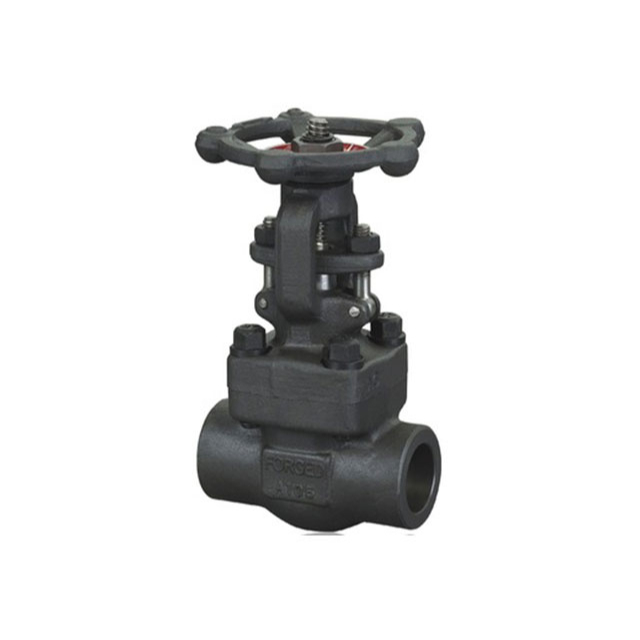
For a forged steel gate valve where handwheel and stem specifications need to match precisely, our forged wedge gate valve page lists the construction details by pressure class.
Gate Valve Stem Replacement
A Gate valve stem replacement is a more involved repair than swapping the handwheel. The stem is the threaded rod that drives the gate, and a bent or stripped stem means the valve will not reach fully open or fully closed.
The procedure requires shutting off the flow, removing the bonnet, and extracting the stem assembly. Packing replacement is almost always necessary at the same time. Skipping it means returning to the valve within months for a leak repair.
Before ordering a replacement stem, confirm whether it is rising or non-rising. Installing the wrong type creates clearance problems or prevents the valve from reaching full travel.
Smart Integration is Key
Handwheel gate valve designs in industrial applications are increasingly specified with sensor integration. Position sensors on the stem transmit real-time valve status to control systems, removing the need for manual inspection across large facilities.
Predictive maintenance systems use friction and stroke data from these sensors to flag valves showing early signs of stem wear or packing degradation. For facilities running continuous processes, catching a developing problem before it forces a shutdown is worth considerably more than the cost of the sensor.
The mechanical side has not changed. What has changed is that the same handwheel turn that opens a valve can now trigger a data point that prevents the next unplanned shutdown.
Why Specification and Source Matter

Customize the perfect valve for your project! Get a quote and explore our custom options.
Getting the handle type right is only part of the decision. The valve it sits on needs to meet the same standard.
Xintai Valve Group holds ISO 9001, API 6D, API 600, API 602, CE, and SIL certifications across its product range. With an annual production capacity of 270,000 valves across six manufacturing bases, and supply relationships in over 50 countries, including Petronas and Petrobras qualified projects, the manufacturing infrastructure behind each valve is built to support the specification decisions covered in this guide. Have a valve handle or actuator question that does not fit a standard answer? Reach out to our team, and we will work through it with you.


